Here's the thing about anxiety and sex
Performance anxiety, body shame, racing thoughts about whether you're taking too long, whether your partner is bored, whether this is "normal." I hear it from clients constantly. And the cruel part is that the more you chase the feeling, the further it runs. The harder you concentrate on coming, the less likely it is to happen.
That disconnect between what you want to feel and what your nervous system is actually doing is the real problem. Not your body. Not your desire. Your brain is stuck in threat mode instead of pleasure mode, and no amount of willpower fixes that.
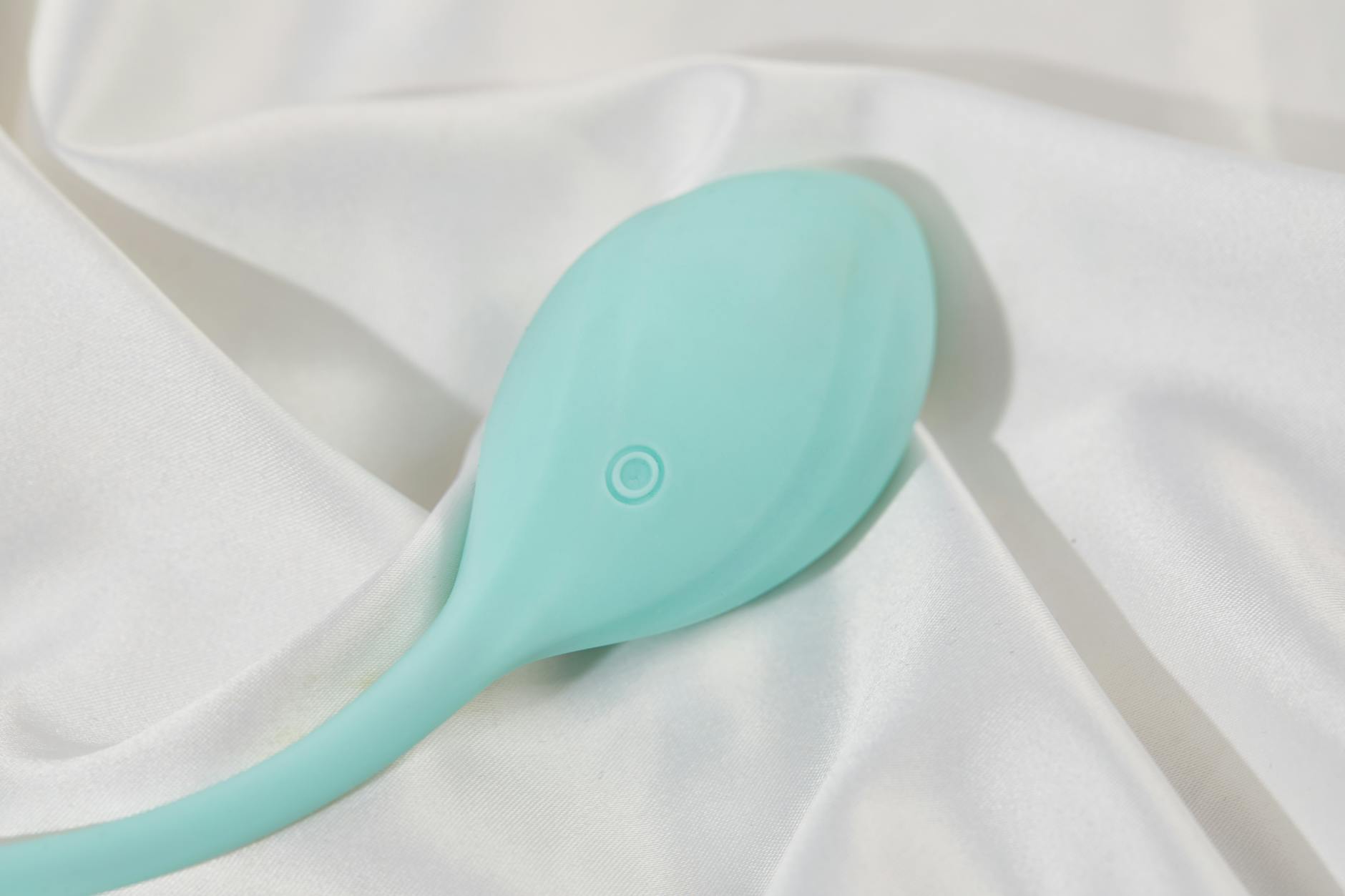
Here's what's wild: a lemon clitoral vibrator often interrupts that loop faster and more reliably than anything else you might try.
Why anxiety hijacks pleasure in the first place
When you're anxious, your sympathetic nervous system (the gas pedal) is pressed down hard. Your brain is scanning for danger. Your muscles are tense. Blood flow is redirected away from the genitals and toward your legs, ready to run. Arousal literally cannot build in this state, no matter how attractive your partner is or how much you want it to work.
Meanwhile, pleasure requires your parasympathetic nervous system (the brake) to be engaged. You need to feel safe, relaxed, and present. Most conventional advice says "just relax" or "focus on the feeling." Both are useless because you can't force your nervous system to downshift through intention alone.
This is where sensation specificity matters. Your brain can't be in threat mode and simultaneously process intense, novel sensory input. The lemon's unique suction pattern is different enough from anything else you've felt that it demands your attention. Your mind doesn't have bandwidth to loop anxious thoughts and process that sensation at the same time.
How suction breaks the anxiety loop differently than vibration
Vibration is a familiar sensation. Your brain processes it quickly and can slot it into the background. Suction is different. It's a pulling, pulsing sensation that your nervous system treats as novel. That novelty is the feature, not a bug.
When you use a lemon vibrator on your clitoris, the sensation is specific and intense enough to occupy the conscious part of your brain that would otherwise be running the anxiety script. You can't simultaneously worry about whether you're doing this right and feel a precise, rhythmic suction pattern on the most sensitive part of your body. The attention has to go somewhere, and the clitoral nerve is louder than the anxiety.
That's not distraction. That's nervous system regulation through sensory anchoring.
The three ways anxiety shows up during sex (and how the lemon helps each)
Performance anxiety. You're watching yourself from outside your body, judging your response, monitoring whether you're "normal." The lem's suction pattern is specific enough that tracking it requires presence. You slip into your body instead of observing it from the bleachers.
Body shame. You're uncomfortable with being seen or touched because you're self-conscious. A lemon clitoral vibrator lets you explore your own pleasure first, alone or with a partner present but not touching. You're building evidence that your body feels good before you layer in the vulnerability of being touched by someone else.
Timing pressure. You feel rushed, or like you're taking too long, and that fear kills arousal. The lemon works quickly and reliably enough that many people find orgasm in 5-15 minutes instead of the 30-45 minutes typical with other methods. Faster results mean less time in your head.
Anxiety is a control response. The lemon gives you back control
Anxiety often shows up as a need to manage or control the experience. You're trying to make sure nothing goes wrong. You're monitoring your response. You're ahead of yourself instead of in yourself.
When you use a <a href="/blog/how-to-choose-a-lemon-vibrator-for-your-body-type">lemon clitoral vibrator</a>, you're in direct control of intensity, pattern, and timing. You can start at pattern one and work up. You can pause. You can adjust. That agency is grounding. It's the opposite of vulnerability without power, which is what anxiety often feels like during sex.
Clients tell me that having a tool they can control makes it easier to surrender to sensation when they're ready. The lemon is theirs to direct. Then slowly, the control can shift to partner touch or other kinds of engagement, but they've already rebuilt the evidence that their body responds well.
Using the lemon with a partner when anxiety is high
If you have a partner and anxiety is getting in the way, here's what I recommend.
First, introduce the lemon solo. Get familiar with what it feels like, what patterns work, what you like. This removes the performance element. You're just learning your own body.
Then, when you're ready, <a href="/blog/how-to-use-lemon-vibrator-with-a-partner-step-by-step">use it together</a>. Your partner can watch you, or you can use it on yourself while they touch you elsewhere. Or they can hold it while you guide them. The point is that the lemon does most of the heavy lifting in terms of sensation, so there's less pressure on your partner to "perform" and less pressure on you to respond in a specific way.
Many anxious people find that this approach rebuilds trust in their own body and in their partner's presence. The anxiety starts to quiet because evidence accumulates: "my body works, my partner supports me exploring, this feels good."
When anxiety is deeper, and when to get support
If your anxiety around sex is tied to past trauma, relationship rupture, or serious body image issues, a tool alone won't fix it. You'll likely need to work with a therapist or sex counselor. A lemon clitoral vibrator is a helpful companion to that work, not a replacement.
But if your anxiety is in the normal range. If it's the kind of nervousness that comes from not knowing what your body likes, or from pressure to perform, or from being out of practice after a long gap, or from new vulnerability with a new partner. Then yes, the lemon often helps break the loop faster than other approaches.
The bigger picture: pleasure as an anchor
Here's what I've seen repeatedly in my practice. Once someone experiences reliable pleasure through their own body, anxiety starts to soften. Not disappear, but soften. They have a baseline of "my body works, pleasure is available to me, I can find it." That evidence changes the narrative.
Anxiety during sex often comes from disbelief. Disbelief that your body can respond. Disbelief that you're allowed to want this. Disbelief that it's possible for you. A lemon clitoral vibrator is one of the most efficient ways to generate that counterevidence, quickly and reliably. And once you have it, everything else becomes easier.
People also ask
Can using a vibrator make anxiety worse?
For some people, yes, if the experience feels pressured or if there's shame around using toys. The tool is neutral. What matters is whether you're using it because you want to, at your own pace, without judgment. If you're using it to "fix" yourself or because you feel you should, that's when it backfires. Start solo, go slowly, and stop if it doesn't feel right.
How long does it take for a lemon vibrator to help with performance anxiety?
Some people feel a shift in a single session. Others need a few weeks of regular use before the pattern settles in. If you use a lemon clitoral vibrator for pleasure without any performance expectation, the anxiety often decouples naturally over time. You're building new neural pathways: vibrator equals good feeling, not vibrator equals I need to succeed.
Should I use a lemon vibrator if I'm already on anxiety medication?
Yes, absolutely. In fact, people on SSRIs often find that a specific tool like a lemon helps because medication can slightly blunt sensation. The suction pattern of the lem vibrator is intense enough to cut through that and still produce strong sensation and orgasm.
Is it normal to feel disconnected from my body during sex?
Completely normal, especially if you have anxiety or a history of tension around vulnerability. That disconnection is your nervous system protecting you. A lemon clitoral vibrator helps because the sensation is strong enough to pull you back into your body without requiring vulnerability first. You rebuild the safety gradually.
Can I use a lemon vibrator with a partner if I have severe social anxiety?
Yes, and you can customize the experience. Start with them in the room but not watching. Then progress to them watching. Then them touching you elsewhere on your body. Then them holding the lem vibrator. The progression is yours to set. There's no timeline.
What if nothing helps my anxiety around sex?
That's a signal to work with a therapist or sex counselor. Anxiety that persists despite trying tools, communication, and relaxation usually points to something deeper: past trauma, attachment injuries, or core shame. Those things respond better to professional support than to any toy. A lemon clitoral vibrator is a useful tool for the right person in the right moment, but it's not a substitute for therapy.
The real takeaway
Anxiety and pleasure don't coexist. One of them has to give. The lemon works because it's specific, it's intense, and it's under your control. It anchors your nervous system to sensation instead of to threat. That's the whole mechanism. If you're struggling with anxiety during intimacy, whether alone or with a partner, <a href="/contact">reach out</a> and let's talk about whether this is the right approach for you.