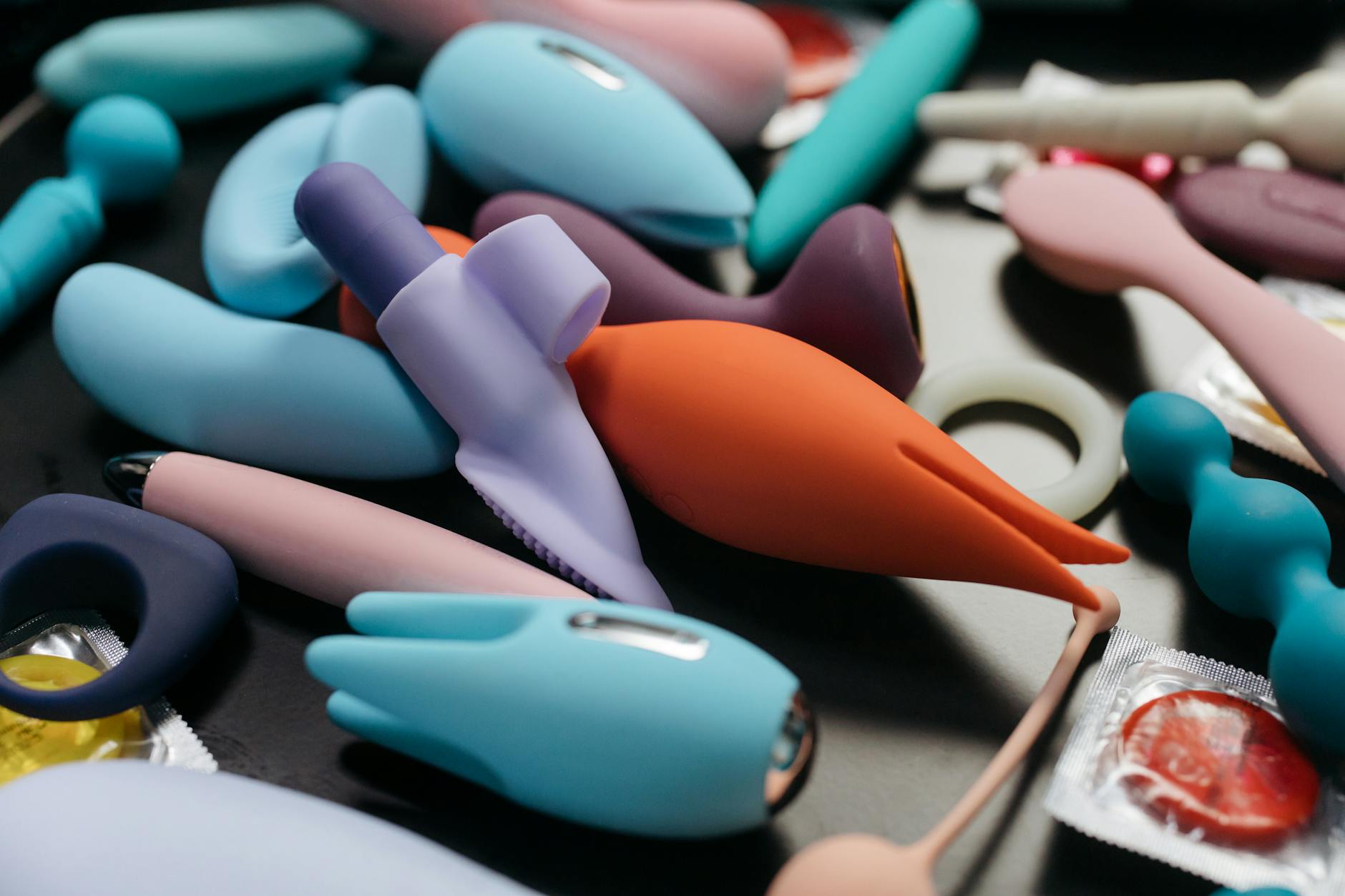
How Lemon Vibrators Help With Desire and Arousal After Antidepressants
Your libido didn't vanish. Your nervous system just got quieter. Here's how to wake it back up, and why air-suction toys work better than you'd expect.
Antidepressants saved your life. And then they flattened your desire, and now you're supposed to just live with that. Except you don't have to.
This isn't a failure of the medication or a failure of you. It's how SSRIs and some SNRIs work on the central nervous system. They dampen arousal signals alongside dampening anxiety. The same numbing that quiets your racing thoughts also quiets the electrical spark that used to flood through your body during sex. You're not broken. Your nervous system is working exactly as the medication designed it to.
Here's the neurobiology stripped down to what matters. SSRIs increase serotonin availability in your brain by blocking its reabsorption. More serotonin helps with mood and anxiety. But serotonin is a total mood dampener when it comes to sexual arousal.
Meanwhile, dopamine and norepinephrine drive desire and physical response. Guess what gets quiet when serotonin levels rise. The arousal chain reaction slows. Your clitoris needs both neural input (nerve signal) and physical stimulus to respond. When the neural part gets muffled, you need more physical input to wake it up.
That's not weakness. That's just mechanics.
Some people find their desire rebounds after a few months as their body adjusts. Others never regain baseline. Most people land somewhere in the middle: desire is lower, arousal takes longer, and orgasm either feels distant or is achievable but requires specific conditions.
This is the practical part that changes things. Traditional vibrators use rapid oscillation, which can feel like static to a nervous system that's already dampened by antidepressants. It's stimulus, but it's not quite the right kind.
Lemon vibrators use air-suction technology, which works on a completely different principle. Instead of vibration, they create a gentle pulsing suction that stimulates thousands of nerve endings at once. For people whose arousal system is chemically quieted, this approach has three big advantages.
First, suction creates a broader stimulus field. It's not buzzing a single point. It's creating a sensation that engages more of your nervous system at once. When your arousal circuitry is already running at low volume, wider stimulus often registers better.
Second, suction feels qualitatively different from vibration. It's less about repetitive motion and more about pressure and release. Many people report that suction feels more intense, less tiring, and easier to maintain an orgasm with. That matters when you're already working harder for arousal.
Third, you can control intensity in real time without stopping. With a clitoral vibrator, you're choosing a pattern and hoping it lands right. With a lemon vibrator, you're controlling the pressure directly through how you position it. For medication-affected pleasure, that responsiveness makes a real difference.
If you've been on antidepressants for months or years, your arousal system has basically been in hibernation. Waking it back up doesn't happen in one session.
Start by expecting that this will take patience. Set aside 30-45 minutes without pressure to perform or climax. Your nervous system needs to remember that pleasure is possible. Focusing on the finish line is the fastest way to convince yourself that you can't.
Begin with a lemon vibrator on the lowest setting. Spend 10-15 minutes just exploring the sensation without expectation. Your clitoris will be more sensitive to stimulation than you remember, but it might also take longer to respond. Both of these are normal.
Over several sessions, you can increase intensity and experiment with patterns. Many people find that combining suction with partnered touch or visual input helps rebuild the full arousal chain. You're essentially retraining your nervous system to recognize and respond to pleasure signals.
After 2-3 weeks of regular exploration, most people notice a shift. Not necessarily back to baseline. But arousal becomes less like climbing a mountain and more like turning up a volume dial.
If you've been on the same medication for a while and desire loss is significantly impacting your life, this is worth discussing with your prescriber. You have legitimate options.
Some people add bupropion (Wellbutrin), which affects dopamine, to counteract the arousal dampening. Others switch to medications with lower sexual side effects like mirtazapine or certain tricyclic antidepressants. Some reduce the dose if their depression has stabilized.
None of these changes are simple trade-offs. But if sexual dysfunction is real and persistent, it's a legitimate medical conversation.
That said, don't expect your doctor to bring this up first. Many prescribers don't ask about sexual side effects because they assume patients won't raise it. You have to start that conversation.
Some people experience a surprising win. They get a lemon vibrator, try it with zero expectations, and have an intense orgasm within days. This happens because air-suction technology bypasses some of the nervous system dampening that traditional vibration hits head-on.
If this happens to you, don't assume it means you can stop being gentle with yourself. Rebuilding a sustainable arousal response takes more than one good session. But it's evidence that your pleasure system is still there. It just needs the right stimulus.
If you're partnered, your partner probably blames themselves. They usually do. And the blame is misplaced. Make this explicit: your arousal flatness is not about attraction or relationship satisfaction. It's about serotonin levels and how they affect your nervous system.
Then invite them into the process. Not by performing for them, but by exploring together. A lemon vibrator can be part of partnered sex, and many people find that shared discovery actually helps both partners feel more connected than trying to ignore the problem.
Boundary here: this is about rebuilding your own pleasure, not accommodating your partner's needs. If your partner is frustrated or pressuring you, that's a separate problem. Consider working with a sex therapist before you work with a toy.
Your pleasure system won't snap back to how it was before antidepressants, and that's okay because before-antidepressants you also had untreated depression, which wasn't exactly a sexual peak either.
What you're building now is a sustainable arousal practice. You'll probably always need to budget more time for arousal. You might find that certain lemon vibrator patterns work better than others, and that's fine. You'll likely discover that some days are easier than others, usually tied to sleep, stress, and hormone cycles.
This isn't forever maintenance. It's learning what your pleasure looks like under medication and giving it what it actually needs instead of expecting it to function like the version of yourself that never existed on SSRIs.
Maybe, but that's not the solution. Depression absolutely kills desire too. You're trading one form of flatness for another, plus you risk your mood collapsing. If sexual dysfunction is the only side effect you're experiencing, your medication is doing what it's supposed to. Work with the side effect rather than abandoning treatment that's keeping you stable.
Three to six weeks of regular exploration, if you're using the right tools. Some people notice changes in days. Others take longer. The timeline depends on how long you've been on medication, the dose, and how your individual nervous system responds to suction-based stimulation versus other approaches. Patience matters more than speed.
Yes. Desire and physical arousal are not the same thing. A lemon vibrator works on physical arousal, which can exist without conscious desire. Sometimes experiencing physical pleasure wakes up the desire that felt buried. You're not trying to manufacture lust. You're trying to remind your body that pleasure is possible.
That depends on your relationship agreement. If you're monogamous and share bedrooms, they're probably going to find out anyway. If you want to frame it: "My arousal is slower on antidepressants, and I'm experimenting with ways to help my body respond better." That's factual and invites partnership without demanding it.
No. It usually makes it easier because you've reminded your body how to respond to intense stimulus. Many people find they can carry that responsiveness into partnered sex. You're not replacing your partner. You're warming up your nervous system so partnered sex feels like connection instead of obligation.
Talk to your doctor. Bring up the sexual side effects explicitly. This conversation opens doors to medication adjustment, dosing changes, or adding medications like bupropion that counteract arousal dampening. Medical solutions exist. You just have to ask for them.
Antidepressants do their job. They keep you alive and stable. The cost is that arousal gets quiet. That doesn't mean you've lost pleasure forever. It means you need to approach it differently.
A lemon vibrator works because it speaks the language your medicated nervous system actually understands. It's not about intensity or vibration patterns. It's about waking up the right neurons with the right kind of stimulus.
Your pleasure matters. Your stability matters more. The path forward is honoring both.