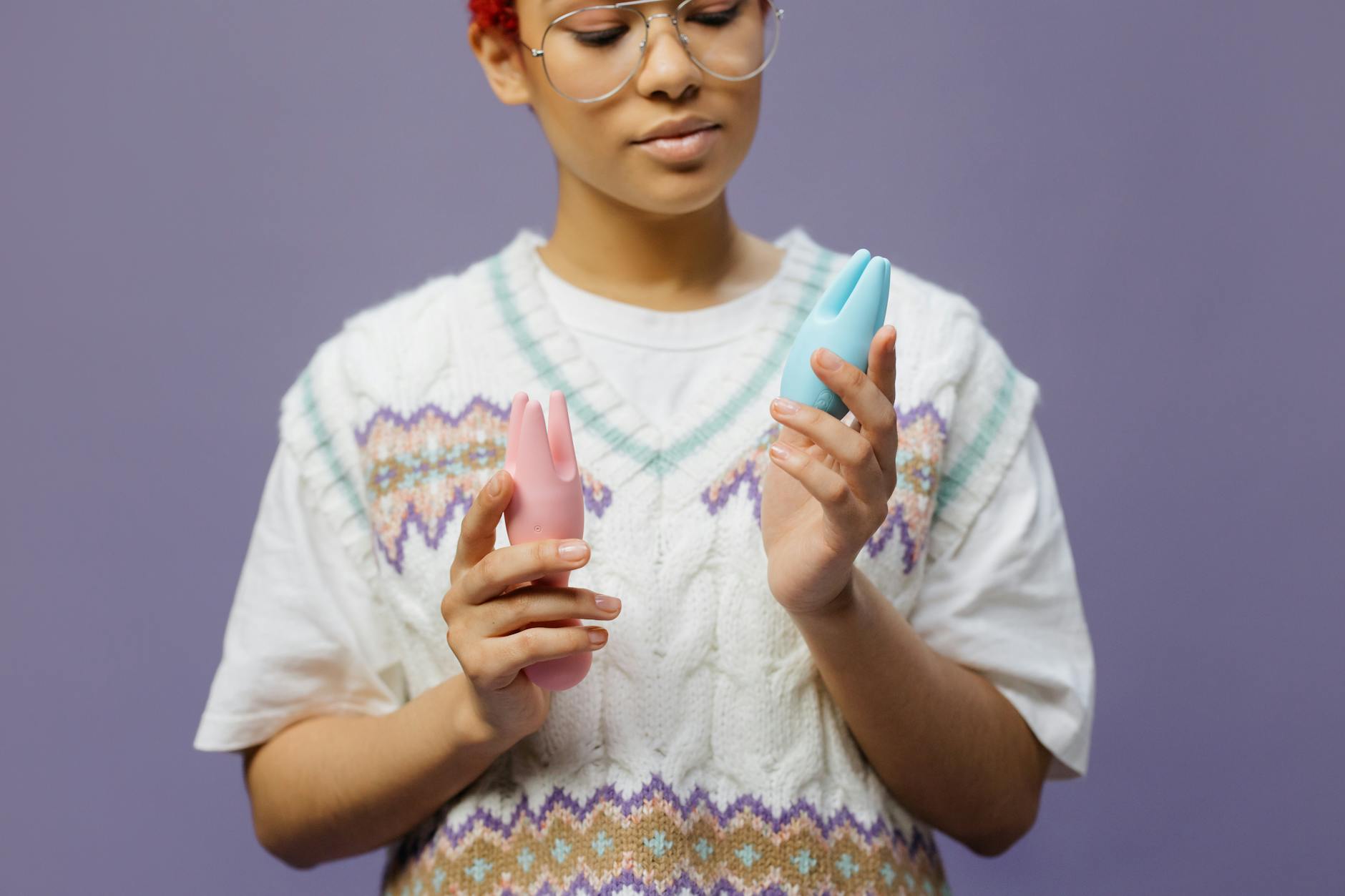
Let's talk about the elephant that leaves the nest
You spent the last 18 years (or more) orchestrating bedtimes, school pickups, and homework battles. Your partner did the same. And somewhere in all that, you both stopped touching each other. Not because you don't love each other. Not because desire died. But because you were exhausted, distracted, and honestly, there was no room for sex between the carpool schedules and the mental load of keeping small humans alive.
Then one day, the house gets quiet. And suddenly you're standing in your own bedroom wondering if you even remember how to want your partner, or if your partner remembers how to want you.
This is actually a better moment than you think. And a lemon vibrator can help you get back there.
Why empty nest couples need to rebuild differently
Here's the thing nobody tells you about the empty nest transition. It's not just about having time again. It's about rediscovering your own body first, then your partner's, then what sex actually feels like without the background anxiety of a teenager potentially walking in.
Many couples who've parented for decades have built a partnership based on logistics and caregiving. That's real love. But it's not the same as desire. Desire needs space. It needs permission. And it needs you to remember that your body isn't just a vessel for managing everyone else's needs.
After two decades of prioritizing kids, your nervous system has learned to stay in low-key survival mode. Your clitoris didn't go anywhere. Your capacity for pleasure is absolutely still there. But your brain might need convincing that it's safe to turn arousal back on.
This is where a tool like a lemon clitoral vibrator becomes valuable. It's not a replacement for intimacy with your partner. It's a restart button for your own nervous system.
Reconnecting with yourself first
I recommend this to almost every client in the empty nest phase: spend 3-4 weeks solo before you even bring your partner into it.
Set aside 15-20 minutes, ideally in the morning or early evening when your energy is highest. Not at night when you're fried. Lie down in your own space. No goal. No finish line. Just explore what feels good on your own body right now.
Most people who've spent decades in parent mode report the same thing: their clitoris feels less sensitive, or sometimes more reactive to light touch. Some say their orgasms used to build gradually, and now they're more of an on-off switch. Others find that their entire arousal pattern has shifted.
A lemon vibrator helps because it gives consistent, reliable stimulation that your brain doesn't have to work to create. You can feel sensation without having to perform. And after two decades of performing (whether that's parenting or partnering), that matters.
Set a pattern. Usually pattern 1 or 2 on most lemon sucker vibrators. Build from there. You're not trying to orgasm. You're trying to remember what your body feels like when it's yours.
Bringing your partner back into the conversation
Once you've spent a few weeks reconnecting with yourself, the conversation with your partner changes entirely.
You're not saying "We need to have more sex." That's performance pressure, and you've both had enough of that.
You're saying something closer to: "I've been exploring what my body feels like again. I want to see what this feels like with you."
That single shift moves the conversation from obligation to curiosity. And curiosity is how couples actually rebuild sexual connection.
Most partners are relieved. Not because they didn't want sex. But because they were waiting for permission, just like you were. They assumed you were too tired, too touched out, too done. Opening that door first often loosens whatever lock they were holding.
How to introduce the lemon vibrator as a couple
Honestly, this part is simpler than you think. You've already introduced it to yourself. You know how it feels. You know what patterns work. That confidence matters.
Try this: on a morning or afternoon when you both have time and aren't rushed, show your partner. Not as a "we should try this." Just as "I've been using this. It feels really good. I want to show you."
Most people feel more connected to something when they understand how it works. Hold your lemon vibrator. Explain the patterns. Let them hold it. The physicality of someone else holding the tool that brings you pleasure is its own kind of intimacy.
Then during sex, use it the way you learned to alone. Your partner can be inside you, or beside you, or watching. The point is that you're not hiding it. You're not sneaking it. You're saying "this is part of how I feel good now."
After 20 years of invisible emotional labor, that transparency is radical.
What to expect in the first few months
Orgasms might feel different than they used to. Your body has changed. Your hormones have shifted. That's not a sign something's wrong. It's a sign that you get to learn your body again.
Some couples find that using a lemon vibrator actually slows them down. Instead of rushing toward orgasm, they linger. They explore. They remember why they liked each other's bodies in the first place.
Expect some awkwardness. You've both forgotten how to be playful in bed. That's okay. Awkwardness is actually the sound of someone trying something new. It passes.
Set a low bar. Aim for once a week of intentional time together. Not sex necessarily. Just time where you're both naked, or close to it, and you're touching. Pleasure doesn't have to mean orgasm. It means paying attention to sensation.
When to reconsider if something's blocked
If after 6-8 weeks of solo exploration you're still feeling completely numb, check with your doctor. Hormonal shifts happen in your 40s and 50s. Some medications tank libido. Sometimes there's a thyroid issue or a deficiency that's making arousal feel impossible.
If you're connecting physically but still feeling distant emotionally, that's different. That might be a sign that the relationship itself needs more than a new vibrator. A couples therapist (one trained in sex-positive frameworks) can help you figure out if you're rebuilding genuine connection or just going through the motions.
Most couples find that once they give themselves permission to prioritize pleasure again, the intimacy builds naturally.
The point is: you're not starting over, you're remembering
You didn't lose your capacity for pleasure. Your teenagers just made it harder to access. Now that they're gone, you get to remember what your body feels like when it's being deliberately, unapologetically attended to.
A lemon clitoral vibrator is a tool. It's not magic. But it does make one thing easier: it gives you permission to prioritize sensation over performance. And after parenting, that permission might be the most valuable thing you get back.
Common questions about rebuilding after empty nest
Is it normal to feel awkward introducing a vibrator to my partner after decades together?
Completely. You've both been focused on someone else's needs for 18 years. You've built communication patterns around logistics, not desire. A vibrator isn't familiar territory, so yes, introducing it feels a little vulnerable. But that vulnerability is actually the gateway back to real intimacy. Couples who can say "I want this" or "I tried this and it felt good" are couples who reconnect faster. The awkwardness is the work. It gets easier.
Will a lemon vibrator change how my orgasms feel?
Maybe. Some people find their orgasms feel more intense with a vibrator. Others find them more localized, less full-body than they remember. This isn't because the vibrator is bad. It's because your body has changed. You've aged. Your hormones have shifted. A good vibrator actually lets you explore what feels good right now, instead of chasing what used to feel good. That's progress.
What if my partner doesn't want to use it together?
That happens. Some partners aren't comfortable with toys. If that's your situation, keep using it solo. That's enough. Solo pleasure is real pleasure. It still counts as rebuilding connection with your own body. And often, when a partner sees that you're committed to your own pleasure, they become curious later. No pressure, though. Your pleasure doesn't depend on your partner's participation.
Can a lemon sucker vibrator actually help if my clitoris feels less sensitive after hormonal changes?
Yes. The suction mechanism works differently than direct vibration. It's gentler on thinned tissue, and many people find it activates sensation in a way that straight vibration doesn't. If you've noticed your clitoris feeling less responsive, that's actually a sign a suction-based lemon vibrator might work better than a traditional vibrator.
How often should we be having sex after the kids leave?
There's no magic number. But research on long-term couples suggests that couples who prioritize physical intimacy once a week or more report higher relationship satisfaction. That said, twice a week matters less than the quality of those moments. One intentional, connected time per week beats forced weekly check-in sex. Start small and build from there.
What if I'm dealing with painful sex after years of infrequency?
That's worth mentioning to your doctor. Sometimes after a long gap, tissue can be a bit irritated or tender. Warm-up, lubrication, and starting slowly matter. A lemon vibrator can actually help here because the suction mechanism is gentler than penetration and can help you reconnect with pleasure without pain. But if pain persists, talk to a healthcare provider. You might benefit from a topical estrogen cream or pelvic floor work.
What reconnection actually looks like
Empty nest isn't the end of your sexual life. It's the chance to remember that your pleasure was always yours, not just something that happened within partnered sex.
Use a lemon vibrator. Spend time with your own body. Tell your partner what feels good. Let your nervous system remember that it's safe to want things. And give yourself permission to not be the same person you were 20 years ago. You're not supposed to be. You're supposed to be someone who learned how to parent well, and now gets to learn how to desire again.