
Here's the thing about aging and arousal
You're not broken. Your arousal isn't gone. It's just slower. And that's not a bug in your system. It's a genuine, measurable shift that happens to most people after 40, and understanding why makes it infinitely easier to work with instead of against.
The change is real, but it's also completely workable. A lot of people I work with discover that using a lemon vibrator or other clitoral vibrator during this phase actually changes the whole dynamic. Not because they "need help," but because they've finally given themselves permission to spend 15 minutes building arousal instead of expecting it to happen in 90 seconds.
What actually changes in your body
Estrogen and testosterone both drop gradually as you move through your 40s and beyond. Lower estrogen means the tissue in your vulva gets thinner and less elastic. Lower testosterone means the neurological signals that trigger desire take longer to fire up. Blood flow to the clitoris still happens, but it comes along a bit slower. Orgasm is still completely possible. It just requires more deliberate stimulation.
Your brain doesn't change, though. You still have the same capacity for pleasure, fantasy, and satisfaction. The difference is purely mechanical and vascular. Blood takes longer to rush where it needs to go. That's it.
Honestly though, many people find that this slowing down forces something good. When you can't rely on spontaneous arousal, you actually have to think about what you want. And that thinking, it turns out, is often where the best part starts.
Why a clitoral vibrator works so well during this phase
A lemon vibrator or other high-quality clitoral vibrator does three things that matter here.
First, it provides consistent, targeted stimulation without requiring your blood vessels to keep pace. Instead of waiting for your body to respond naturally, the vibrator is already doing the work. Your nervous system catches up faster when there's external input.
Second, it removes the performance pressure that often kills arousal. You're not waiting for your body to "cooperate." You're using a tool that's designed to work with your anatomy right now, at this phase of your life. That shift in mindset alone can cut 10 minutes off your warm-up time.
Third, air-suction toys like the Lem work particularly well because they stimulate a broader area of nerve tissue without direct pressure. For people whose tissue sensitivity has shifted with age, that broader, gentler stimulation often feels more intuitive than intense vibration alone.
The warm-up that actually works
Forget the five-minute warm-up. You need 15 to 25 minutes now, and that's completely normal. Here's how I structure it with clients.
Minutes 1-5: Mental shift. Put your phone down. Tell your partner (if there is one) you need 15 minutes. Light a candle if that helps. The point is to actually mentally arrive in your body instead of checking off a box. Arousal starts in your brain, and if your brain is thinking about dishes, nothing will speed up your blood flow.
Minutes 5-12: Slow sensation. Touch your skin without any tool. Breasts, thighs, stomach. No agenda. The goal is to wake up nerve endings and get blood moving generally. Breathe slowly. Notice temperature and texture.
Minutes 12-25: Vibrator focus. Start your lemon vibrator at the lowest setting. Don't go straight to the clitoris. Stimulate the outer lips first, the inner thighs, the area around the clitoris. Build gradually. You'll feel when intensity is right, and it's usually 10 to 15 minutes in, not 2 minutes in.
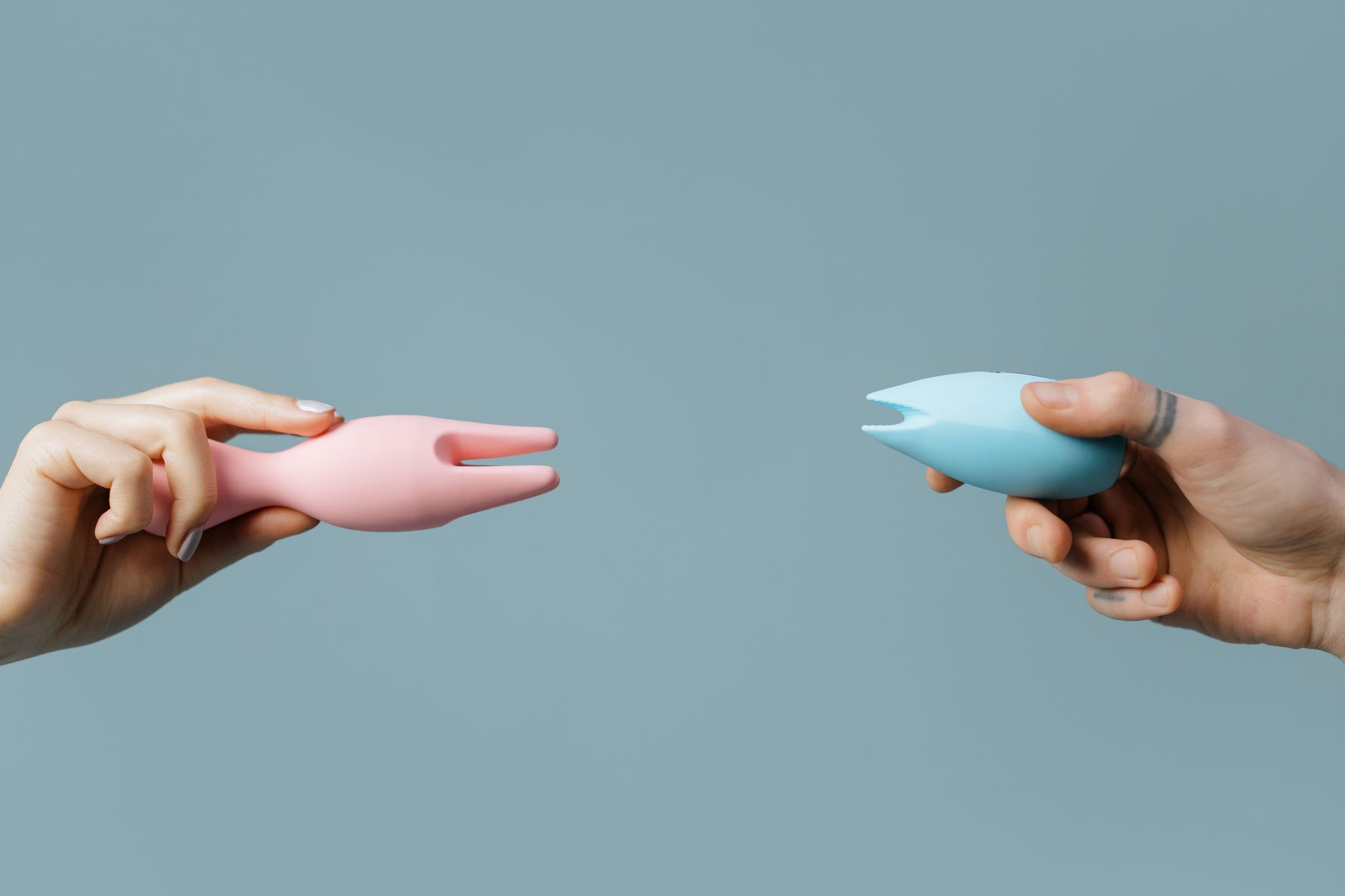
Photo by cottonbro studio on Pexels
That's not inefficient. That's your actual arousal curve now. Fighting it wastes energy. Working with it gets better results.
Lubrication matters more, and that's fine
Your body produces less natural lubrication as estrogen drops. This is not optional to address. Friction without adequate lubrication creates irritation, which kills pleasure and makes you less likely to want to try again.
Use a water-based lubricant every single time. Not because something is wrong with you, but because tissue needs help now. A lot of people resist this step because it feels like admitting defeat. It's not. It's using the right tool for the current conditions.
Apply lubricant before you start the vibrator. Reapply as needed. If you're using a silicone toy, use only water-based lube because silicone-based lubes damage silicone toys. If you're using a toy made from another material, double-check the toy's care instructions.
You'll notice pretty quickly that the combination of a lemon clitoral vibrator plus good lube feels completely different than either one alone. The vibrator moves better. The sensation is cleaner. Your arousal builds faster. This is what works now.
The pelvic floor factor nobody talks about
As estrogen drops, the muscles that support your pelvic floor get less collagen and elasticity. That means two things happen simultaneously: the floor gets tighter and less flexible, which feels like tension even when you're trying to relax.
This tension actually blocks arousal. A clenched pelvic floor restricts blood flow and makes orgasm harder to reach. So ironically, doing intense Kegel exercises (which tighten the floor) can actually make this phase harder, not easier.
Instead, spend a few minutes before using your vibrator actually relaxing your pelvic floor. You can do this by bearing down gently (the opposite of a Kegel), breathing into the area, or even just thinking about your pelvic floor as soft and open. Apps like Pelvic Floor Physical Therapy can guide you through this if you're not sure what that feels like.
Once your pelvic floor is actually relaxed, your vibrator will work better and arousal will come faster. This sounds like a tiny detail, but it's genuinely one of the biggest differences I see with people over 45 who start using toys intentionally.
Sensation fatigue and how to avoid it
One weird thing that happens as you age: if you use the same vibration pattern or the same intensity every single time, your nervous system gets used to it and stops responding as vividly. This isn't numbness. It's habituation.
A lemon vibrator helps here because most quality clitoral vibrators have multiple patterns and intensity levels. Don't fall into using the same setting every time. Rotate through patterns. Some days use pattern 2 for 10 minutes, then switch to pattern 4. Other times use a lower intensity for longer instead of high intensity for short bursts.
This variation keeps your nervous system engaged and prevents that dulling-down effect. It also makes each session feel fresher, which keeps the whole experience more engaging mentally.
When to see a doctor
If pain shows up during arousal or after using a vibrator, don't wait. Genitourinary syndrome of menopause (GSM) is real and treatable. Many GPs or gynecologists trained in midlife health can prescribe topical estrogen creams that make a measurable difference in tissue health and sensation within weeks.
If arousal is completely absent and you're not dealing with depression, medication side effects, or major relationship stress, a conversation with your doctor about testosterone therapy might be worth having. It's prescribed more cautiously in some countries than others, but it's available and genuinely life-changing for the right person.
If your vibrator causes any irritation, redness, or unusual discharge, stop using it and check with a doctor. Your anatomy at this stage deserves care, not persistence.
The mental piece you can't skip
Here's what I tell every person over 45 who comes to me frustrated about arousal. The slower your physical arousal gets, the more important your mental arousal becomes. You cannot speed up blood flow through force of will. You can absolutely redirect your attention in ways that help.
Spend time thinking about what actually turns you on. Not what you think should turn you on. Not what used to work. Right now. Fantasies change. Bodies change. Permission changes. At this stage of life, you often have more clarity about what you actually want. Use that.
When you're using a lemon vibrator, let your mind wander into that space. Don't stay stuck on "am I aroused yet." Stay with "what feels good right now." That subtle shift in focus is the difference between a frustrating experience and one that actually builds into something.
FAQ
Can I use a lemon vibrator if I have decreased arousal from aging?
Completely. A clitoral vibrator is actually one of the best tools for slower arousal because it provides consistent external stimulation while your body's natural arousal response takes its time. Start at low intensity and give yourself a full 15 to 25 minutes. You'll likely find that you reach intensity faster with external help than you would waiting for your body alone.
How often should I use my vibrator if arousal is slow?
Use it as often as feels good, without pressure. Some people use it daily, others a few times a week. The more regularly you use it, the more familiar your nervous system becomes with that sensation, which can actually help speed up your arousal response over time. Think of it like practice for your body.
Does using a lemon vibrator mean something is wrong with me?
No. Using a vibrator means you're adapting to where your body is now. That's smart, not broken. Age shifts arousal. Tools help. That's the full story. Most people who use clitoral vibrators after 40 find that pleasure actually deepens, not shrinks.
Should I tell my partner I'm using a vibrator for arousal?
That depends on your relationship. If you're partnered, transparency usually helps. Something like "My arousal takes longer now, and using a vibrator helps me build up faster. I'd like to use it during sex" is often all that's needed. Many partners actually appreciate knowing the problem and the solution instead of feeling like something mysterious is going wrong.
How long does it take to build arousal with a vibrator?
With a clitoral vibrator and 15 to 25 minutes of actual focused time, most people find intensity builds noticeably in that window. The vibrator doesn't rush the process, but it does make your body's natural response more efficient. You're working with your nervous system instead of fighting it.
Is it normal that my arousal takes longer at 45 or 50?
Completely. This is one of the most consistent changes people experience as they age. Slower arousal is not dysfunction. It's a normal physiological shift. The only problem is if you fight it or shame yourself for it. Working with the new timeline actually leads to better outcomes than resisting it.
The bottom line
Arousal slowing down doesn't mean pleasure is ending. It means your body's timeline is shifting, and that's workable. A lemon vibrator or other quality clitoral vibrator, combined with more generous warm-up time and better lubrication, often gets people to intensity faster than they expected. The tool isn't covering a deficiency. It's meeting your body where it is right now. That's the whole story.
If you're struggling with arousal changes and want to explore what's possible, I'd love to talk through what might work best for you. Reach out at /contact and let's figure it out together.