Let's start with what nobody talks about
Grief kills desire. That's not poetic or metaphorical. It's neurological. When you're in active grief, your nervous system is in survival mode. Pleasure circuits go offline. Sex feels obscene. Even thinking about your own body feels like a betrayal of the person you've lost.
Then one day, usually without warning, something shifts. A moment of levity. A flash of attraction. A thought that doesn't immediately feel wrong. Desire creeping back feels confusing, sometimes guilty, sometimes like a relief you're not supposed to admit to.
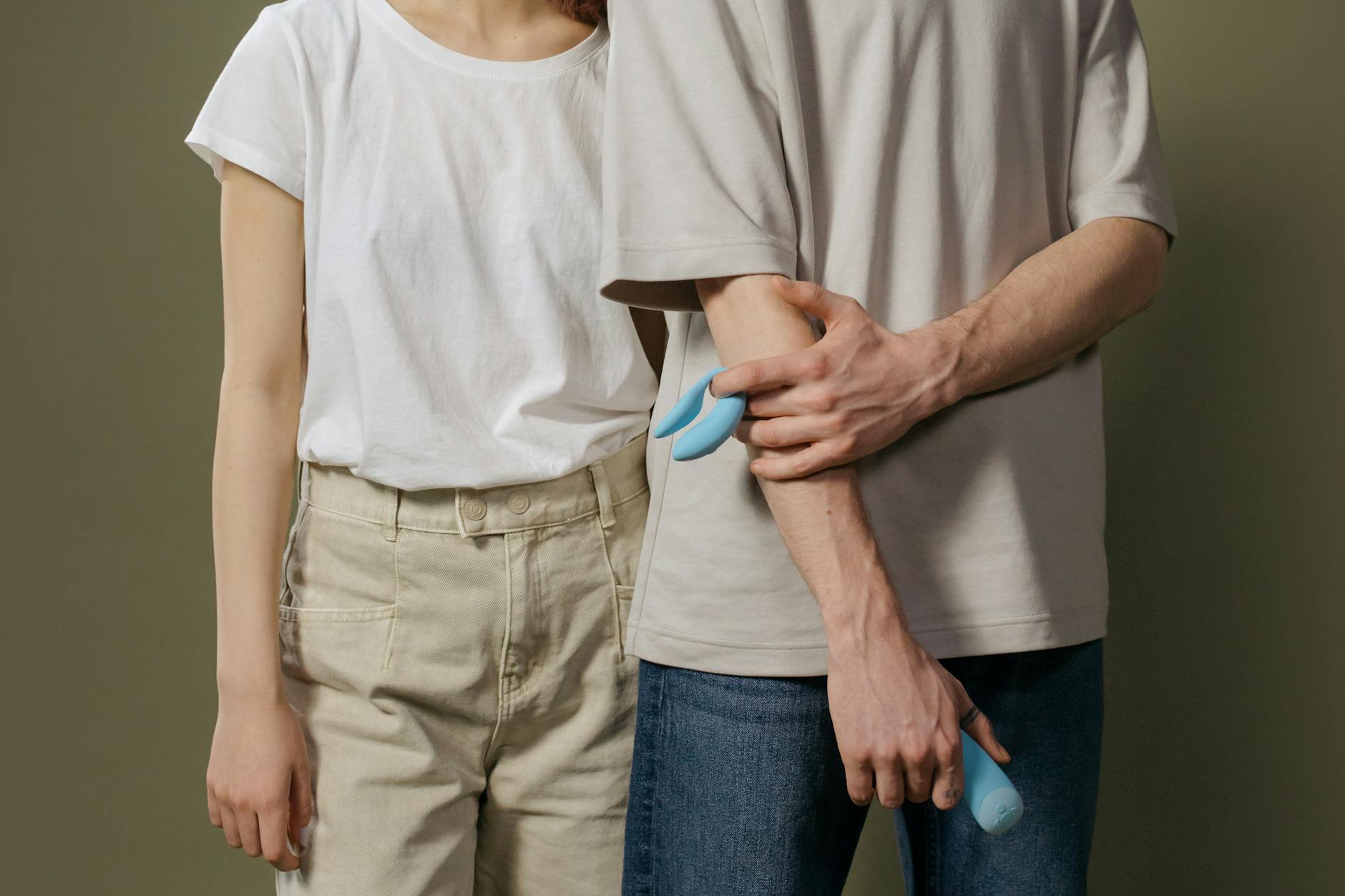
This is where a lemon clitoral vibrator, used thoughtfully, can help you bridge the gap between numbness and reconnection. Not as a celebration yet. Just as a tool for listening to your body again.
Why grief mutes pleasure so completely
During active grief, your prefrontal cortex (the part that feels joy and connection) literally goes quiet. Your amygdala (fear and threat processing) gets louder. Cortisol and adrenaline flood your system. Your body is running a survival protocol.
Pleasure requires the opposite state. It needs safety, presence, and blood flow to your extremities. When you're grieving, your blood is being directed away from pleasure zones and toward your muscles and heart (the fight-or-flight response). This isn't dysfunction. It's your nervous system protecting you by reducing stimulation when you're already overwhelmed.
What matters is understanding that the return of desire doesn't mean you didn't grieve hard enough or that you're forgetting who you've lost. It means your nervous system is slowly shifting back into a state where pleasure is neurologically possible again.
The guilt piece (and why it's normal)
Most people who've experienced significant loss tell me the same thing: when desire started returning, they felt guilty. Like pleasure was disrespectful to the memory of the person who died. Like their body had no right to want something while grief was still sitting in the room.
This guilt is real and worth naming, but it's also worth questioning. Reclaiming your own pleasure is not a betrayal. It's a sign that you're integrating the loss rather than being consumed by it. Grief and desire can exist in the same body. They don't cancel each other out.
If you're partnered, this can get even more complicated. Your partner might not be on the same timeline as you. They might feel judged if you're suddenly interested in sex again. Or they might have also lost desire and feel confused when yours returns first. None of this means you're doing it wrong.
How to start: the preparation phase
Before you even pick up a lemon vibrator, a few things make the difference.
Create the right container. This isn't about rose petals or candles unless that actually feels good to you. It's about removing judgment. Give yourself explicit permission to explore pleasure without it meaning anything. Not "I'm ready to move forward." Just "I'm curious what my body feels right now." That's enough.
Pick a time when you're not exhausted. Grief is exhausting. If you're already depleted, adding any stimulation will feel like too much. Wait for a morning or afternoon when you have energy and won't be interrupted. Rushed or interrupted pleasure doesn't work neurologically, and it certainly doesn't work when you're already fragile.
Start with touch before the vibrator. Spend a week just noticing sensation. A hand on your arm. A warm shower. How does your skin feel? Is it numb? Reactive? This baseline matters because you want to notice the difference the vibrator makes.
Introducing the lemon vibrator: the gentle return
When you're ready (and you'll know you're ready when curiosity outweighs guilt), here's the approach that works best for people in this place.
Use the lowest setting. A lemon clitoral vibrator is designed for precision, which is perfect right now. Start at pattern 1 or 2. You're not trying to orgasm. You're just trying to wake up your nerve endings and prove to your nervous system that sensation is still possible.
Touch it to your inner wrist first. Not your vulva. Your wrist. Feel the suction. Feel the vibration. Get comfortable with the sensation on a less emotionally loaded part of your body. This tells your brain the vibrator is safe before you bring it closer to places connected to vulnerability.
Keep sessions short. Five to ten minutes the first few times. You're not building toward anything. You're practicing presence. When you notice your mind drifting to grief or guilt, that's fine. Notice it and come back to the physical sensation. "My wrist feels buzzing. That's interesting. What else can I feel?"
Expect numbness. Grief deadens nerve endings. You might not feel much, or what you feel might be distant. That's not failure. That's information. Your nervous system is still waking up.
The middle ground: when sensation starts returning
After a few sessions, something usually shifts. The numbness softens. A touch starts to register. You might even feel a faint spark of interest in sensation for its own sake.
This is where you can start moving the lemon vibrator to your clitoris, still at low settings. Keep the same mindset. You're not chasing an orgasm. You're practicing presence and connection to your own body.
If you have a partner, this is also when some people find it helpful to use the vibrator during partnered sex, even if neither of you is that interested yet. The vibrator does the stimulation work so neither of you has to perform. You can both just exist together. Some couples find this feels less emotionally loaded than traditional sex right now.
When orgasm comes back (or doesn't, and that's okay)
Here's what usually happens next: one day, usually when you're not expecting it, an orgasm arrives. It might feel different from before. Softer. More emotional. Less explosive. Some people cry. Some feel relief. Some feel conflicted again.
All of this is normal. Your body has been through something. Your relationship with pleasure has shifted. Even as your nervous system heals, it remembers. That's not broken. That's integration.
Some people find that after loss, they never quite go back to their previous relationship with pleasure. They find a new normal that's slower, deeper, more conscious. That's not less. It's different. And sometimes different is actually better.
Reclaiming your own pleasure is not a betrayal. It's a sign that you're integrating the loss rather than being consumed by it.
If guilt keeps showing up
Sometimes guilt doesn't disappear after a few sessions. Sometimes it's still there months later, whispering that pleasure means you've moved on too fast, that you're betraying the person you've lost, that your body shouldn't want something your heart is still grieving.
If that's you, this isn't a vibrator problem. You might benefit from talking to a therapist, particularly someone trained in grief work. Guilt is often layered. Sometimes it's about the person who died, but sometimes it's about other things.permission you never gave yourself to have pleasure at all, or anger at your partner that's hiding under the guilt, or ambivalence about your own life continuing while someone else's didn't.
A good therapist can help you untangle those threads. A lemon vibrator is a useful tool for reconnection, but it's not a substitute for processing the deeper stuff.
When to pause and recalibrate
If using a clitoral vibrator starts to feel obligatory, like another thing you should be doing to move forward, pause. That's your nervous system telling you the pace is too fast. Pleasure works on invitation, not willpower.
The same applies if sensation comes back but it doesn't feel good. Sometimes trauma lives in the nervous system. Sometimes pleasure receptors have been offline so long they need more time. Sometimes your body just needs a slower approach.
If that's where you are, try a water-based lubricant and the absolute lowest setting. Or put the vibrator away entirely for a few more weeks. There's no timeline for this. Grief doesn't follow a schedule, and neither does the return of pleasure.
The bigger picture
Using a lemon vibrator during or after grief isn't about forcing your way back to who you were before the loss. It's about creating a space where your body can exist separately from your grief for a few minutes. Where sensation can be something you notice and explore rather than something you're numb to.
Your pleasure matters. Your body matters. The person you've lost matters. All of that can be true at the same time.
People also ask
Is it wrong to use a vibrator while I'm still grieving?
No. Grief and pleasure can coexist. Your nervous system needs periods of activation and relief, even during active grief. Using a vibrator is a form of self-compassion, not betrayal. That said, if guilt is intense, that's worth exploring with a therapist. Sometimes guilt points to something deeper that needs attention.
How long does it usually take for desire to come back after loss?
There's no standard timeline. Some people feel the shift within weeks. Others take months or years. Factors like the type of loss, your attachment to the person who died, whether you're partnered, and your relationship history with pleasure all matter. Grief is not linear, and neither is the return of desire.
Can I use a lemon clitoral vibrator with my partner if they're not interested in sex yet?
Yes, and it can actually be helpful. A vibrator takes the pressure off both of you to perform. You can use it during physical affection without it being "sex," which can feel less loaded when you're both fragile. Some couples find this helps them stay connected when neither person has much desire.
What if sensation doesn't come back after months of trying?
If numbness persists beyond a few months and you're not in active crisis grief anymore, it's worth talking to a doctor. Prolonged numbness can sometimes indicate depression or other things that benefit from professional support. A vibrator is a tool for reconnection, but it's not a diagnostic device.
Is it normal to feel emotional or cry when pleasure comes back?
Very normal. Your body has been in a protective state. When that state softens, emotions can come loose. Crying, relief, mixed feelings, guilt, joy, or all of it at once is actually a sign your nervous system is processing and healing. Let it happen.
If I'm not in a relationship, is it okay to use a vibrator right now?
Absolutely. Some people find that solo reconnection with pleasure is actually easier than navigating it with a partner who might be on a different timeline. A vibrator gives you control over pace, intensity, and meaning. You can explore what feels good without any other person's grief or expectations in the room.