
Let's be real about birth control and pleasure
Hormonal contraceptives are incredible. They give you control over your timeline, your fertility, your body's future. And they can absolutely mess with your sex drive. Both things are true at once.
Most conversations about birth control and arousal go one of two directions: either someone insists nothing changes (lie), or they act like low libido is the cost of contraception you just accept (also lie). The actual truth is messier and more fixable than either narrative allows.
Here's what I've seen work in my practice: understanding what's happening physiologically, separating real changes from coincidence, and choosing tools like a lemon clitoral vibrator that work with your new baseline instead of fighting it.
How hormonal birth control rewires your arousal system
Contraceptive hormones don't just prevent ovulation. They change the exact neurochemical soup that drives desire.
Progestin (the synthetic progesterone in most pills, IUDs, and implants) damps down the spike in testosterone that normally happens mid-cycle. Testosterone isn't a man-only hormone. People with ovaries produce it, and it's a major driver of sexual appetite. Lower testosterone often means less spontaneous desire, slower arousal, and orgasms that require more direct stimulation to arrive.
Estrogen levels also shift depending on your method. Combined hormonal methods (pill, patch, ring) keep estrogen relatively stable, which usually feels better than the pill's synthetic version. Progesterone-only methods (mini-pill, hormonal IUD, implant) have even less estrogen, and that's when people often notice the biggest changes in lubrication, clitoral sensitivity, and orgasm intensity.
Here's the tricky part: your brain also has hormone receptors. Changes in circulating estrogen and progesterone affect dopamine and serotonin pathways, which influence motivation, mood, and the baseline arousal dial. Some people feel muted. Others feel anxious. Some feel totally fine. The variation is wild.
Why your arousal might feel slower (and what that means)
If you've noticed that the spark takes longer to catch on birth control, you're not imagining it.
Spontaneous desire—the kind that just happens when you see your partner or think about sex—relies heavily on testosterone. When you're on hormonal birth control, spontaneous desire often decreases. That doesn't mean you've lost the ability to feel aroused. It means the ignition system has changed. You might need more deliberate stimulation, longer warm-up time, or external tools to cross the threshold into arousal.
This is where a clitoral vibrator designed for consistent, targeted stimulation makes a real difference. A lemon vibrator like the Lem uses suction and pulsation to create sensation that doesn't rely on your own physiological response to ramp up. It works directly on the clitoral complex in ways that can bypass some of the delays birth control creates.
The second thing that changes: orgasm reliability. Some people find orgasms easier on hormonal birth control (especially when period pain or anxiety was killing the mood before). Others find them harder to reach, or less intense when they do. Progesterone-heavy methods tend to flatten the sensation a bit. Again, a vibrator with multiple intensity levels and patterns lets you adjust the stimulation to what your body needs on a given day.
The lubrication question (and it's not as binary as you think)
Yes, hormonal birth control can reduce natural lubrication. The drop in estrogen means thinner vaginal tissue and less fluid production. But this varies wildly by person and method.
If you've noticed your body produces less lubricant, that's a real signal to listen to. It doesn't mean you're broken or that birth control is wrong for you. It means your routine needs to shift.
Water-based lubricant becomes your friend—not because something's wrong, but because thinner tissue benefits from the glide. Silicone-based lubes feel richer, but they can degrade silicone toys, so stick to water-based if you're using a lemon sexual toy or any silicone device.
Longer foreplay also helps. Give your body 15–25 minutes instead of 5 to build arousal and natural lubrication. That's not a failure. That's just how hormonal birth control reshapes the timeline.
When you're on birth control and exploring with a partner
This is where relationship dynamics get tricky. If birth control has genuinely lowered your desire, but your partner hasn't changed, the mismatch can feel awkward or guilty. It shouldn't.
The most useful conversation to have isn't "I want more sex" or "I want less." It's "My body is responding differently to stimulation now. Here's what I've noticed. Can we experiment together?"
That's when a lemon clitoral vibrator becomes useful for both of you. If you find that direct clitoral stimulation now requires more intensity or duration to reach orgasm, your partner doesn't have to feel like they're failing. The vibrator becomes neutral equipment, not a referendum on attraction.
If you're using a lemon sucker or similar device, start with lower intensity settings (levels 1–3) and work up. Many people on hormonal contraceptives find that suction feels better than the kind of deep vibration that can feel overwhelming on thinner or less responsive tissue.
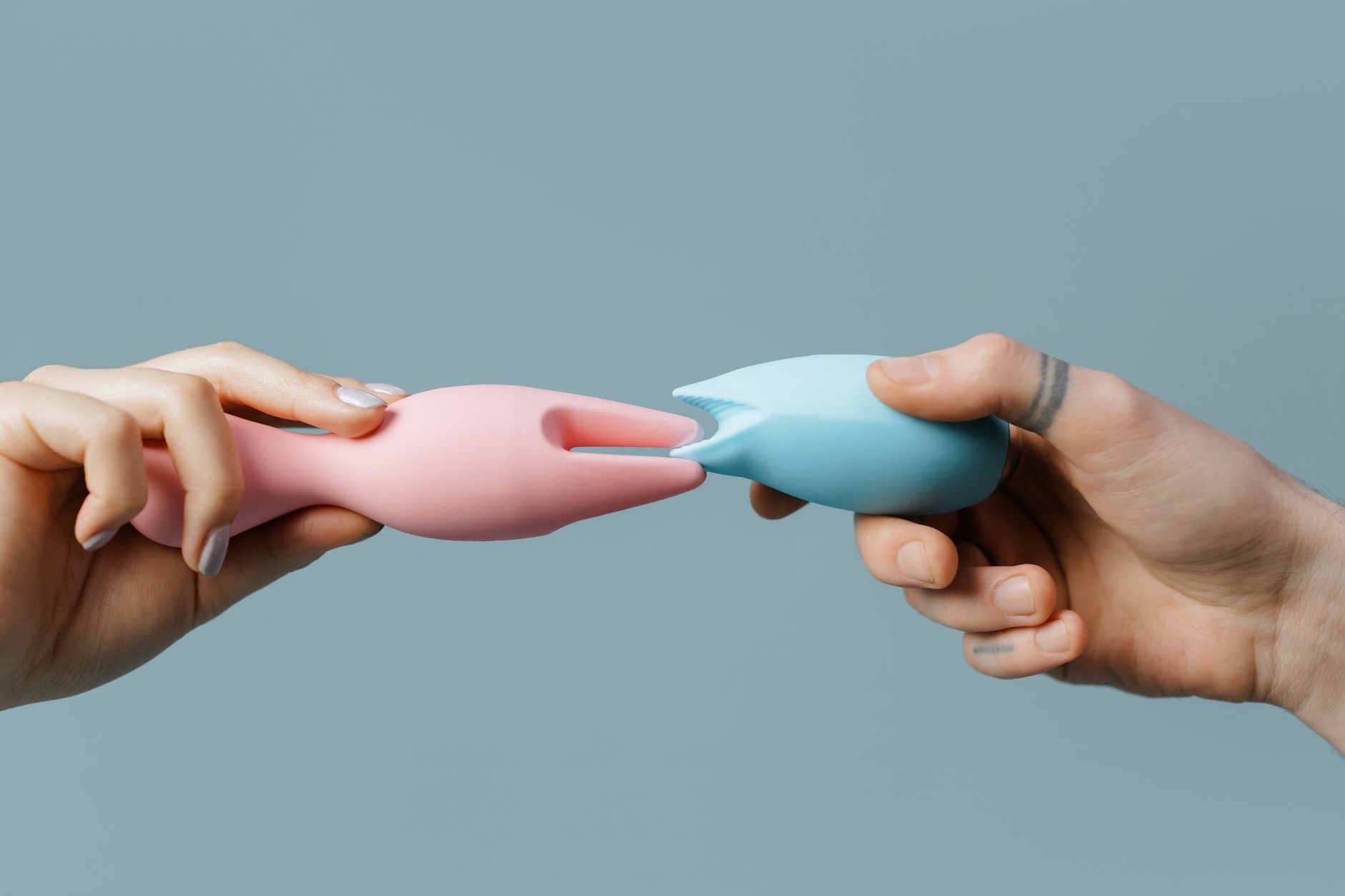
Photo by cottonbro studio on Pexels
How to know if it's the birth control or something else
Here's where it gets real: hormonal birth control gets blamed for a lot of things it didn't cause.
If you started a new method and your arousal tanked three days later, that's probably the hormones. But if you've been on the same pill for two years and desire just evaporated last month, something else might be happening. Relationship stress, work burnout, depression, or even just the mundane friction of long-term partnership can tank desire way more effectively than hormones.
Ask yourself: Did the change happen when I started this method? Or has something else shifted—my job, my relationship, my stress level, my body image? If you can't trace it to the birth control timing, it's worth having a deeper conversation than just switching methods.
That said, some people do feel dramatically better on different contraceptives. If you've tried one method for 3–6 months and it's still flattening your desire, it's absolutely fair to talk to your doctor about switching. Progesterone-only methods often have more side effects on arousal than combined methods. The hormonal IUD (which releases progestin directly into the uterus) tends to have fewer systemic effects than the pill. The copper IUD has zero hormones, and some people's desire snaps back immediately when they switch.
Practical tips for using a lemon vibrator on hormonal birth control
Four adjustments that make the biggest difference:
Budget more time. Arousal takes longer, so plan 25–30 minutes instead of expecting instant results. Your body isn't slow. It's just operating under different instructions.
Start at lower intensity. Birth control can make tissue more sensitive to overstimulation. Begin at pattern 1 or 2 and increase gradually instead of jumping to intensity 5.
Combine it with lube. Water-based lubricant is your ally, especially if you're noticing dryness. Apply before you start, not as a band-aid when things feel uncomfortable.
Stack sensation with mental focus. If spontaneous desire is lower, adding a vibrator can feel clinical without context. Pair it with something that engages your mind—erotica, imagination, a conversation with your partner about what you want.
Many people find that suction-based stimulation (like a lemon vibrator) feels less exhausting and more effective than traditional vibration when hormones have shifted sensitivity.
What to tell your doctor (because this conversation matters)
If birth control is genuinely affecting your sexual function or desire, mention it. Not in a "should I switch" way necessarily, but in a "this is how my body is responding" way.
A good clinician will ask clarifying questions: When did it start? Is it total loss of desire or just slower arousal? Have you tried adjustments like longer foreplay or using a vibrator? Do you feel emotionally connected to your partner?
Sometimes the answer is switching methods. Sometimes it's patience while your body adjusts (three months in, things often feel more normal). Sometimes it's addressing something completely separate—anxiety, relationship strain, or depression—that got masked by the hormonal conversation.
Just don't resign yourself to lower pleasure as the price of contraception. It rarely is.
FAQ: Birth control, arousal, and using a lemon vibrator
Does hormonal birth control permanently change your sex drive?
No. If you switch methods or stop contraception, desire often bounces back to baseline within a few cycles. Some people feel permanently different—maybe because their baseline was artificially suppressed by hormones, or maybe because they're older or their relationship has shifted. But the birth control itself isn't creating a permanent state. It's creating a temporary one that reverses when the hormone exposure stops.
Can you use a lemon clitoral vibrator if you're on the pill?
Absolutely. A lem vibrator actually works really well on hormonal birth control because the sensation doesn't depend on your natural arousal response. If your body is slower to lubricate or feel sensitive, a vibrator provides direct, consistent stimulation that helps you bridge that gap. Just use water-based lubricant and start at lower intensity.
Why does birth control feel different for orgasms specifically?
Progesterone affects the pelvic floor muscles and the neural pathways involved in orgasm. When progesterone is higher (or when you're on a progesterone-based method), orgasms sometimes feel flatter or require more stimulation. This is purely physiological, not psychological. A vibrator with adjustable patterns can help you find settings that work with your new physiology instead of against it.
Should I switch birth control if it's affecting my arousal?
Not necessarily immediately. Give a new method three to six months before deciding. Your body adjusts, and sometimes arousal returns. But if after six months you feel genuinely disconnected from pleasure, or if your relationship is suffering, talking to your doctor about alternatives is completely reasonable. Copper IUDs, different pills, or even non-hormonal methods exist.
Can a partner tell if you're on hormonal birth control based on changes in sex?
Maybe. If you've been together a while, they might notice slower arousal or different orgasm patterns. But framing this as "I'm on birth control so my body works differently now, let's figure this out together" prevents it from becoming a weird shame spiral. You're not broken. You're just working with different hardware.
Is it normal to feel emotionally flat on birth control and have low sex drive too?
Yes. Estrogen and progesterone affect dopamine and serotonin, which influence both mood and desire. Some people on hormonal contraceptives feel emotionally muted. That's a conversation to have with your doctor because it might mean your current method isn't right for you. Depression and low libido often travel together, and they're both addressable.
The short version
Hormonal birth control changes how your body experiences arousal and sensation. That's not a personal failing. It's not something you ignore or just accept. It's information you use to adjust your approach.
Tools like a lemon vibrator aren't workarounds for a broken system. They're instruments that work with your current physiology instead of against it. When you understand what birth control does to your arousal system, and you have tools that meet your body where it is now, pleasure becomes accessible again, not something you chase.
If you're struggling with how birth control is affecting your sexual life, reach out. Whether it's adjusting your routine, trying a different method, or working through relationship dynamics, you don't have to figure this out alone. Contact us to discuss what might work for your situation.