
Let's be real about desire after conflict
Libido doesn't disappear when a couple fights. It freezes. There's a difference. When conflict is fresh, your nervous system is still in protection mode. Arousal requires the opposite state. Once the dust settles and you both decide to reconnect, desire often comes back fast. But it comes back differently.
It's tender. It's uncertain. It can feel almost like starting over, even if you've been together for years. That's not broken. That's actually the path forward.
Why libido shuts down during conflict
Here's the physiology. When you're fighting or in sustained tension with your partner, your body stays in sympathetic mode (fight or flight). Arousal lives in parasympathetic mode (rest and digest). Your nervous system doesn't care about semantics. If it senses threat, it won't clear the runway for pleasure, even if your brain says you want to reconnect.
This is why makeup sex sometimes feels forced. You might desperately want physical connection, but your body hasn't fully shifted out of defensive posture. The desire is there. The access to that desire is what gets stuck.
Once you've had a real conversation, set boundaries, or genuinely moved through the conflict, that permission slowly returns. And when it does, the body often responds faster than the mind expects.
The three-phase reconnection arc
Most couples move through this in stages, though not always in a neat line.
Phase one: tentative touch. You're testing the waters. Hands, kissing, checking in without expectation. If this is where you are, skip the vibrator entirely. Your job right now is rebuilding basic physical trust. A lemon clitoral vibrator will wait.
Phase two: solo pleasure, parallel. You're in bed together, but each of you is using your own device or hand. There's no performance pressure. You're showing your partner what you like, in your own time. This is where a lemon vibrator becomes useful. You can move at your own pace while your partner does the same. Presence matters more than synchronization.
Phase three: integrated play. Now you're using the lemon vibrator as a bridge between you. Your partner holds it, or you guide their hand. You're communicating what feels good in real time. This is the stage where actual intimacy rebuilds, because the toy becomes a tool for connection, not a substitute for it.
Most people jump to phase three when they're still in phase one. That's where things get awkward.
How to introduce the vibrator without adding pressure
If you're both ready and you want to use a lemon clitoral vibrator, say it directly. Not in the moment. In conversation.
"I want us to reconnect. I'm thinking about using a vibrator together. Would you be open to that?"
That's it. You're not asking permission. You're inviting them into your desire. They can say yes, no, or "let's table it and check in later." All three are fine.
If they say yes, agree on when. Not "whenever you want." A specific night. That takes the spontaneity pressure off and gives you both time to prepare mentally.
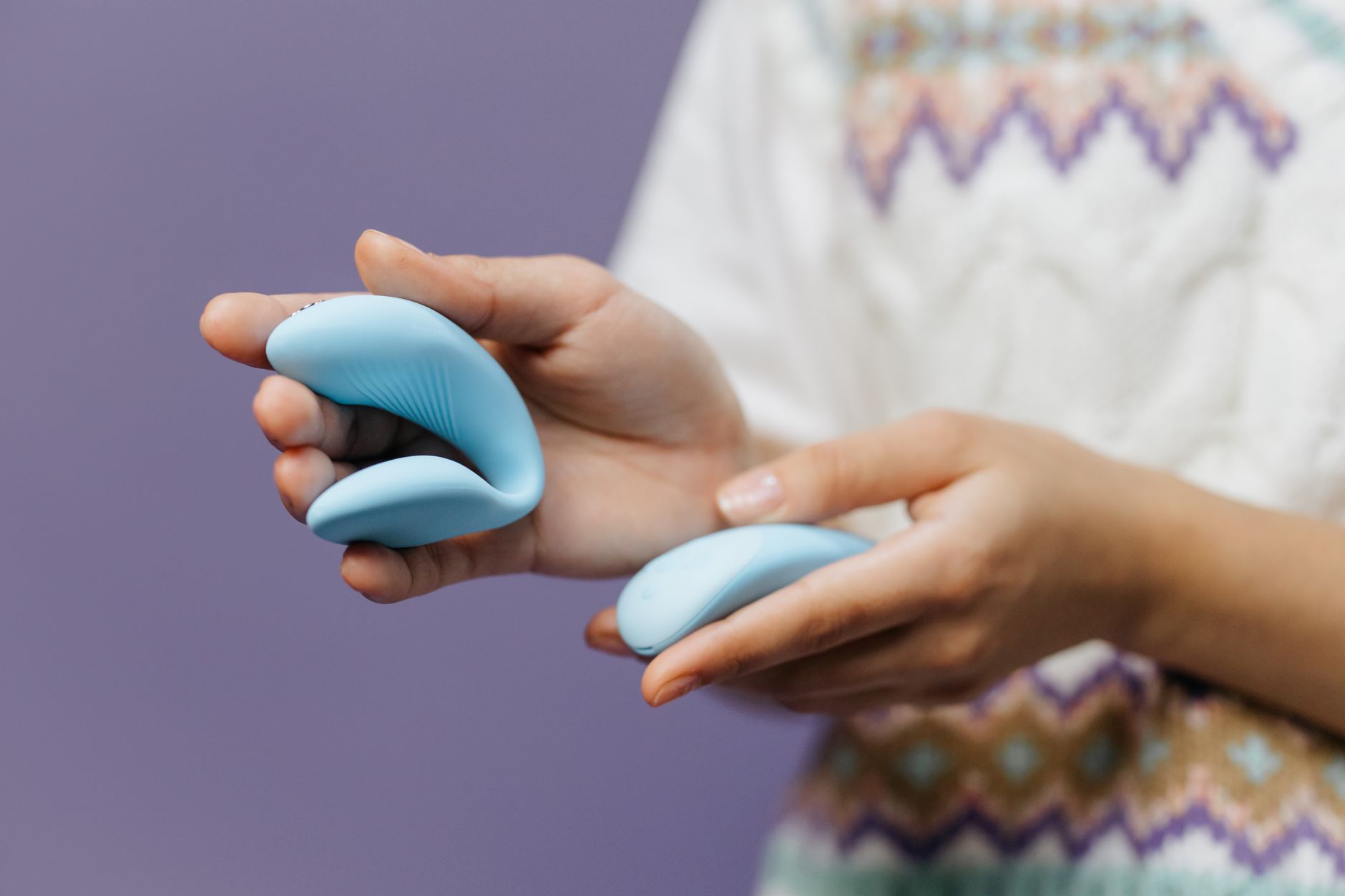
Photo by cottonbro studio on Pexels
The actual mechanics of using a lemon vibrator together
Start very slow. Slower than you think you need.
Begin with the lemon vibrator on the lowest setting. The Lem, our lemon sucker style vibrator, uses suction and pulse patterns that feel completely different from traditional vibrators. At low intensity, it's almost meditative. It draws rather than buzzes. This gentleness matters when you're rebuilding trust.
Your partner can hold it. This gives them agency and lets you stay present with sensation instead of managing the toy. Tell them what you like. "A little higher." "Stay right there." "Slower." This constant micro-feedback is actually how couples rebuild communication during sex after conflict.
If penetration is part of what you do together, integrate the lemon vibrator slowly. Use it for external stimulation first. Let your nervous system recognize that this is about your pleasure, not performance. Once arousal builds, your partner can be inside you while you use the vibrator, or they can hold it while you connect. There's no one right way.
If you're both comfortable, you can explore the lemon clitoral vibrator solo while your partner watches or touches you elsewhere. This removes the "I need to make you come" pressure and lets them be present without performing.
What you might feel emotionally
You might cry. Not because something's wrong. Because you're letting your guard down with someone you just defended yourself against. Tears and arousal exist on the same nervous system pathway. They can overlap.
You might feel disconnected at first. Like your body isn't responding even though your mind wants to. That's normal after conflict. Give it time. Keep using the lemon vibrator across several sessions, not just one. Intimacy is rebuilt in repetition, not in a single redemptive night.
You might feel more desire for your partner mid-conflict next time, knowing that reconnection is possible. That's actually a sign that your nervous system is learning to trust again. That's the goal.
When to pause and talk instead
If either of you feels numb, performative, or pressured during sex, stop. That's data. You haven't actually moved through the conflict yet. More sex won't fix it. Talking will.
If one partner is doing it to appease the other, the lemon vibrator won't help. Physical intimacy after conflict only works if both people genuinely want to reconnect. If resentment is still present, no toy changes that.
If you're using the vibrator to avoid the hard conversation, you'll know it. Sex will feel like a band-aid. Conflict will return. Go back to talking first.
Pacing the rebuilding process
After conflict, patience is everything. You don't need to "get back to normal" in a week. You're not trying to erase what happened. You're integrating it and choosing to stay.
Use the lemon vibrator once or twice a week, not every day. Quality over frequency. Let your partner see what pleasure looks like on you. Let them feel trusted with your body again. That's the actual repair.
If you're using a lemon clitoral vibrator or lemon sexual toys for the first time after a rough patch, remember that the toy is a facilitator, not a solution. The solution is the two of you deciding you're worth the effort.
People also ask
Is it normal for libido to come back after a major fight?
Completely normal. Once the conflict resolves and you feel safe again, arousal returns relatively quickly. Your nervous system isn't in protection mode anymore. What takes longer is the emotional vulnerability required for good sex. That rebuilds at its own pace.
Should we use a vibrator before we've fully resolved the conflict?
No. If resentment is still active or the conversation isn't finished, sex feels hollow. Wait until you've actually made repairs. Then a lemon vibrator can deepen what's already healing.
How do I bring up using a toy without making my partner feel like they're not enough?
Frame it as addition, not replacement. "I want us to explore this together" is different from "I need this because you're not working." If your partner is insecure, acknowledge that directly before introducing a lemon clitoral vibrator. Build that conversation separately.
What if my partner is resistant to using toys after conflict?
Resistance often means they're worried about what it represents. Take time to understand that worry. Are they feeling replaced? Judged? Pressured to perform? Once you understand the fear, you can address it. Sometimes the lemon vibrator comes later. Sometimes it never does. Both are okay.
Can lemon vibrators actually help us reconnect, or is that overstated?
A vibrator is a tool, not a therapist. It can create space for pleasure and presence, which helps rebuild physical trust. But the real work is the conversation, the apology, the repair. The toy just makes the physical part easier. You still have to do the emotional work.
How long does it typically take to feel normal again after relationship conflict?
Sexual desire usually returns within days or weeks. Emotional safety takes longer. Some couples feel fully reconnected in a month. Others take three or six. There's no timeline. The lemon sucker vibrator can help you stay connected while that process unfolds, but it doesn't speed it up.
The actual path forward
Conflict in relationships is inevitable. How you move through it determines whether you stay. Using a lemon vibrator after a fight isn't about performing passion you don't feel. It's about creating the conditions for real desire to return. That requires honesty, patience, and willingness from both people.
When you're ready to rebuild, go slowly. Use the vibrator in whatever way feels authentic. Talk about what you feel. Let your body trust your partner again. The pleasure you find on the other side of conflict is often deeper than what you had before. You've earned it.
If you're navigating relationship repair and want to explore physical reconnection safely, we're here to help. Reach out anytime.