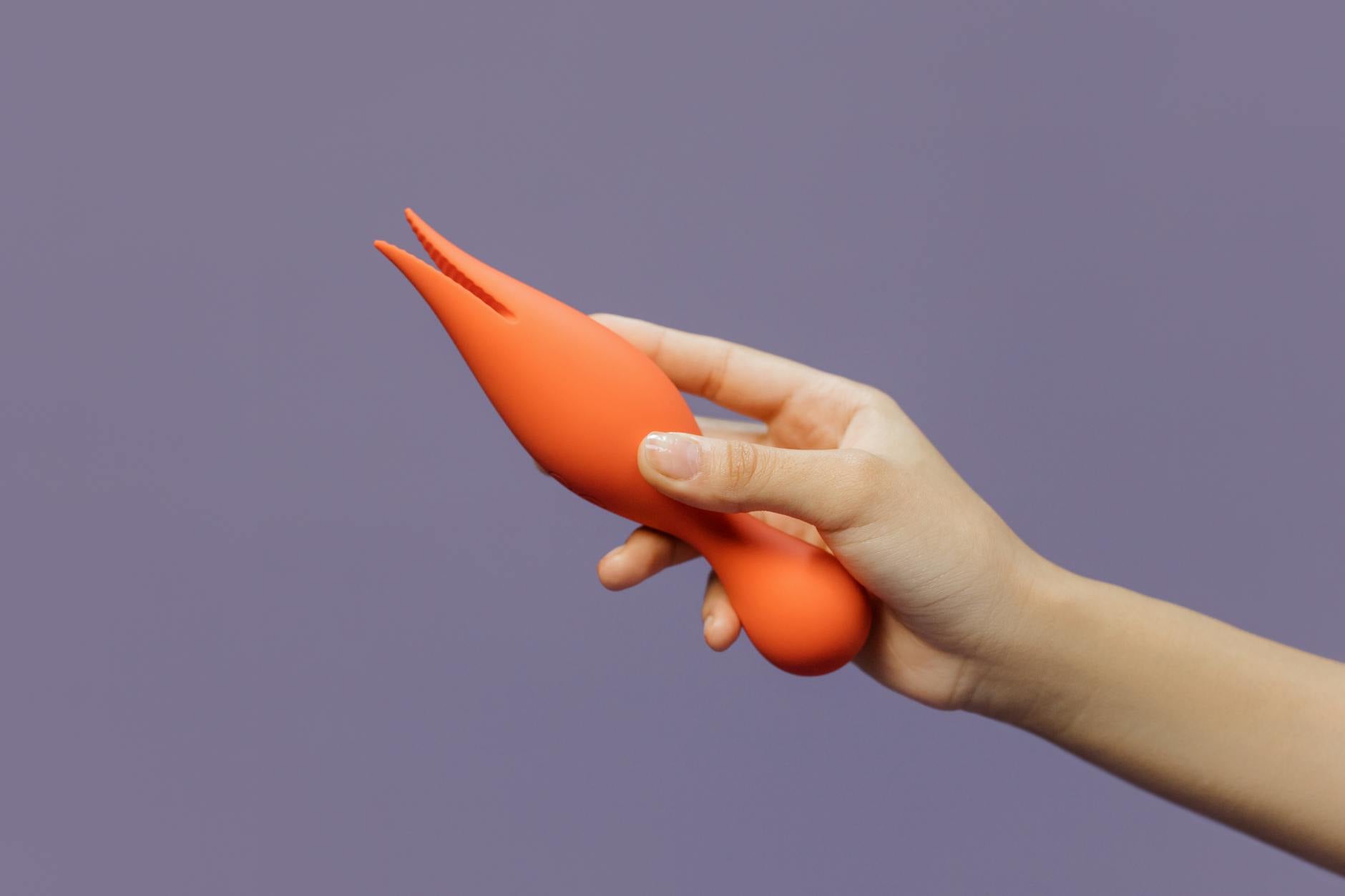
Here's the thing nobody talks about
Your partner thinks a vibrator means you're not satisfied with them. That's the real block. It has almost nothing to do with the toy itself and everything to do with what they've learned about masculinity, adequacy, and what pleasure is supposed to mean in a relationship. Understanding that difference is the hinge on which this whole conversation turns.
Why partners resist (and it's rarely what you think)
Most resistance isn't about disgust or moral judgment. It's about fear. Here are the three fears I hear most often in my practice.
Fear one: "If you need a vibrator, I'm not enough." This one's deep. Men especially absorb the message that their body, their hands, their attention should be sufficient. A vibrator reads as a referendum on his sexual value. Women absorb it too, but it lands differently. The script goes: if I ask for a toy, I'm admitting failure. Neither script is true, but both feel very true from inside the narrative.
Fear two: "This means you're going to leave me for someone better." The logic is absurd but the feeling is real. A vibrator becomes a symbol of independence, which reads as a symbol of departure. This fear often shows up in relationships where there's already insecurity about connection.
Fear three: "If we start doing this, I'll lose control of what happens in our sex life." Some partners equate a lack of control with a loss of intimacy. They imagine the vibrator as a threat to the dynamic they've built.
None of these fears are rational, which means you can't argue your way out of them. You have to understand them first.
The conversation that actually works
Don't lead with the vibrator. Lead with desire. That's the reframe that changes everything.
"I want us to explore things that help me feel more. Not instead of you. With you." That sentence moves the conversation from "I want a toy" to "I want more of you." You're not replacing him. You're expanding. And you want him in the expansion.
Then get specific about what a lemon clitoral vibrator actually does. It's not a replacement for anything. It's a tool that changes how your body responds to stimulation. Suction technology works differently than any hand pressure can. It wakes up nerve endings that don't always wake up otherwise. For many people, this means better orgasms, faster arousal, and deeper sensation.
That's not a threat to your partner. That's a gift to both of you.
Making it about your shared pleasure
Here's what changes the conversation: ask him to be there when you use it. Not to watch from a distance. To participate. To hold you. To touch you while the vibrator does its work. To see what it does to your body. To feel how much more responsive you become.
Many partners who were resistant to vibrators become enthusiastic once they experience what happens when they combine hand work with suction stimulation. The synergy is real. It's not the vibrator alone that creates intensity. It's the combination. Your partner stops seeing the toy as a replacement and starts seeing it as a tool that makes the experience richer for both of you.
Photo by cottonbro studio on Pexels
If he's still hesitant, try this: ask him what his fantasy is. Not in a sexual way. In a "what would make you feel most connected to me" way. Then explain how a lemon vibrator could serve that fantasy. Maybe he wants to see you fully satisfied. Maybe he wants to feel like he's the one who creates that for you. The vibrator doesn't prevent that. If anything, it makes it possible.
The first time: lowering resistance
When you finally bring out a lemon clitoral vibrator, introduce it the way you'd introduce a new position. Casual. Curious. No ceremony. "I want to try this. Want to help?" is all you need.
Start with lower settings. Patterns one through three on a device like the Lem let you explore what the suction feels like without overwhelming sensation. This isn't about rushing to climax. It's about learning together.
While you're using it, talk to him. Tell him what you feel. "This changes everything" or "I can feel the difference when you touch me here too." Narrate the experience. Make it intimate. Make it collaborative. He's not sitting on the sidelines. He's part of what's happening.
What to do if he stays resistant
Some partners dig in. They refuse to engage. They make it clear the vibrator is unwelcome. That's a different conversation entirely, and it's not about the toy anymore. That's about consent, autonomy, and whether the relationship has room for both of you.
You have the right to explore your own pleasure. Alone. That's not a threat to the relationship. That's self-knowledge. If a partner refuses to allow you that autonomy, the issue isn't the vibrator. The issue is control. And that might be worth exploring with a couples therapist.
Most partners, though, soften once they understand what's actually happening. They realize the vibrator isn't about leaving. It's about staying. It's about feeling more alive, more connected, more present. And when that clicks for them, resistance usually dissolves.
Why this matters beyond the bedroom
Couples who can navigate disagreement about pleasure often navigate other disagreements better. You're learning to communicate about something vulnerable without shame. You're learning that wanting something different doesn't make one person right and the other wrong. You're learning that you can both get what you need.
That skill transfers everywhere. The relationship deepens because you've shown each other it's safe to want things and ask for them. That's what actually changes a couple's intimacy. Not the toy. The conversation.
If your partner is genuinely open but just needs time, give him time. Start with education. Share articles. Explain clitoral vibrators and how they work. Let him come around at his own pace. The couples who succeed with this are the ones who treat it as a team project, not a debate.
FAQs
What if my partner thinks vibrators mean I'm not attracted to him anymore?
The best response is honest: "This isn't about attraction to you. This is about understanding what my body responds to. Sometimes I can feel things differently depending on the kind of touch or stimulation. That doesn't make your hands less important. It makes your willingness to explore with me everything." Follow that with action. Use the vibrator with him present. Let him see that his touch and the vibrator enhance each other, not compete.
Can a lemon clitoral vibrator actually improve my orgasms if my partner is skeptical?
Absolutely. Suction technology used correctly reaches nerve endings that respond differently to other types of stimulation. You can absolutely use a lemon vibrator solo and experience better orgasms. What changes when your partner becomes supportive is that you feel less shame about wanting something, which actually makes the orgasms even more intense because you're not fighting yourself internally.
How do I bring up wanting to use toys without sounding like I'm criticizing his performance?
Frame it as exploration, not correction. "I want to discover more about what turns me on" is different from "You're not doing it right." One is about you getting curious. The other is about him failing. Those are completely different conversations. Lead with curiosity. Say things like "I've been reading about this" or "I'm interested in exploring" rather than "I need you to do things differently."
Is it normal for a lemon vibrator to take some getting used to if your partner doesn't want it involved?
Yes. Using a vibrator solo when you're anxious about your partner's judgment makes it harder to enjoy. Your nervous system is partly activated by shame or conflict, not just by sensation. This is actually why having his buy-in matters. Once he's supportive, your body usually relaxes and responds much more easily. The change isn't in the toy. It's in your internal safety.
What if he agrees to try it but clearly still resents it?
That's worth addressing directly. "I notice this feels tense. I want to understand what you're actually feeling." Sometimes partners need to admit that they tried but it triggered something deeper. Resentment that's unspoken poisons intimacy more than an honest conversation ever could. Get curious about what's really going on. It might be insecurity, control issues, or past trauma. Those things are real and they're worth discussing.
How long does it usually take before a skeptical partner becomes more open?
It varies wildly. Some partners soften after one conversation. Others need months. What I've noticed is that resistance dissolves fastest when they feel involved in the decision and included in the experience, not like it's being done to them. Take your time. This isn't about rushing him into acceptance. It's about building trust that this change is good for both of you.
The bottom line
A lemon clitoral vibrator isn't a threat to your relationship. Shame is. Secrets are. Unmet desires that fester are. What strengthens a couple is the ability to say "I want something different" without that meaning "I want someone different." Once your partner understands that distinction, a vibrator becomes what it actually is. A tool. Nothing more, nothing less. And often, exactly what you both needed to feel more connected.