When desire becomes performance
Let's be real. When your partner's expectations, needs, or disappointment become part of your sex life, arousal doesn't just slow down. It stops. Your body literally cannot separate the safety you need from the pressure you're feeling, and the more you try to perform, the further away genuine pleasure becomes.
This isn't you being broken. This is your nervous system doing exactly what it's supposed to do. Pressure and genuine arousal are neurologically incompatible. You can't be simultaneously hypervigilant about pleasing someone and actually feeling pleasure yourself. The brain doesn't work that way.
The good news: a lemon clitoral vibrator, paired with real boundary work, can be your entry point back to your own body. Not as a performance tool for your partner, but as a direct line to what you actually want.
How partner pressure kills arousal
Partner pressure shows up in three main ways, and they all damage desire in different ways.
Expectation pressure happens when there's an unspoken (or spoken) timeline. Your partner wants sex on certain days, at certain times, at a certain pace. Even if they're not angry about it, you can feel the expectation. Your body reads it as: "I have a job to do here." And the moment sex becomes a job, your parasympathetic nervous system (the one that allows arousal) checks out.
Performance pressure is subtler. Your partner is watching your reactions, checking whether you're "getting there," worried they're not doing it right. You start monitoring your own responses instead of feeling them. This is the opposite of the focus and safety that real arousal needs. You're not in your body. You're observing your body from the outside.
Disappointment pressure is the worst kind, because it's baked into the silence. Your partner was hoping for more enthusiasm, more noise, more orgasms. Maybe they've mentioned it once or twice, or maybe you just sense it. Either way, you now have invisible pressure to perform something you don't actually feel. This creates shame on top of the pressure, and shame is arousal's kryptonite.
The boundary conversation you need first
Before you pick up a lemon vibrator, you and your partner need to have a conversation that probably feels scarier than it should.
The conversation is not: "You're making me feel pressured." (That sounds accusatory and usually triggers defensiveness.)
The conversation is: "I need to rebuild my own connection to my pleasure, separate from us for a while. That means some nights I need to explore solo. This isn't about you. It's about me getting back to myself."
That's it. Then stop talking. Let your partner sit with it. The best partners will understand immediately. Others will need time. A few will push back, and that's information too.
Here's what you're not doing: you're not asking permission. You're not framing it as temporary. You're setting a boundary that says your pleasure matters independent of theirs.
Starting solo with the Lem
Once you've had that conversation (or even while you're having it), make time for solo exploration that is completely separate from couple time.
This is not foreplay. This is not preparation. This is you discovering what your body actually wants when there's zero audience and zero stakes.
Pick a time when you're alone and unhurried. Twenty to thirty minutes, no time limit, no goal. The pressure to orgasm is often as damaging as the pressure to perform. You're looking for sensation, not a destination.
Start without the toy. Spend five minutes just touching yourself. Notice what actually feels good, not what you think should feel good. This is grounding work.
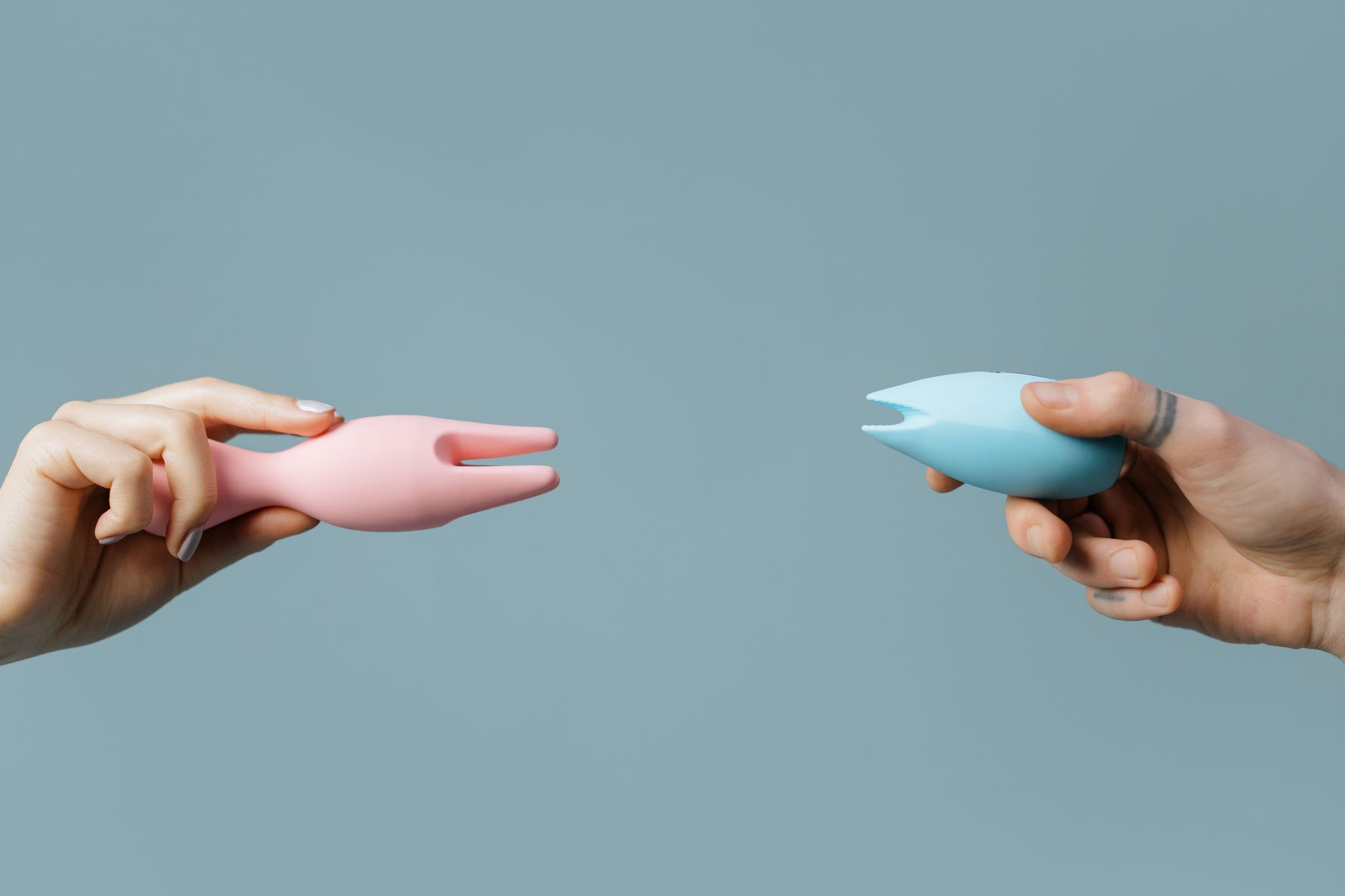
Then introduce the lemon clitoral vibrator at a low setting. The Lem or a similar Nancy toy works beautifully here because suction-based stimulation is fundamentally different from vibration. It's not repetitive percussion. It's a gentle, building pressure that mimics what happens during arousal naturally. That means your body can actually lean into it instead of bracing against it.
Start at pattern 1 or 2. Move it around your clitoris slowly. The goal is to relearn what pleasure feels like when you're the only one in the room.
Notice if you feel guilt or pressure even when you're alone. If you do, pause. That's your nervous system telling you it's not safe yet. Maybe you need more distance from your partner. Maybe you need a conversation with a therapist. That's real information, not failure.
Rebuilding desire in the partnership
Here's what's counterintuitive: as you rebuild your own pleasure, your desire for your partner often comes back. Not always, but often. Because desire that's built on pressure is not desire. It's obligation. Real desire is what you feel when you're safe.
Once you've spent a few weeks exploring solo, you might bring the conversation back to your partner.
"I've been working on reconnecting with my own body. I want that to inform what we do together." This frames the vibrator not as a Band-Aid on a broken system, but as a tool you're actively choosing.
Some partners will want to be involved. Some won't. Both are fine. If your partner does want to participate, the only rule is: they follow your lead. You're holding the toy. You're setting the pace. They're a witness and a support, not a director.

Photo by Diana ✨ on Pexels
If you notice yourself performing again, stop. You don't need an explanation. "I'm not feeling it right now" is complete. The moment you start managing your partner's disappointment, you've lost the thread.
When the pressure is deeper
Sometimes partner pressure is about more than just sexual expectations. It's about control, coercion, or a fundamental imbalance in how much your needs matter.
If your partner consistently ignores your boundaries, gets angry when you say no, or makes you feel unsafe in the relationship, a vibrator is not the solution. You need support, and you need it from someone trained to help.
Nancy's Lemon Shop isn't a substitute for therapy or relationship counseling. If you're reading this and thinking "this actually sounds like my situation," please reach out. You can contact us or find a therapist who specializes in relationship dynamics and coercive control.
Reclaiming pleasure as an act of self-respect
Using a lemon clitoral vibrator when your partner's pressure has killed your desire is not selfish. It's not a sign you don't care about them. It's you saying: my pleasure matters. My body matters. My yes and my no both matter.
That's not a small thing. In a culture that tells women and people with vulvas that desire is something you give to someone else, it's radical.
Start small. Go solo. Use the Lem as permission to feel something purely for yourself. And then watch what happens to your relationship when you're no longer performing. Often, that's when real intimacy becomes possible.
People also ask
How do I know if the pressure I'm feeling is real or just in my head?
If you're monitoring your partner's reactions during sex, adjusting your sounds or movements based on what they might want, or feeling relief when it's over, the pressure is real. Your body doesn't lie. It doesn't matter whether your partner intends the pressure or not. If you feel it, it's affecting your arousal.
Can I use a lemon vibrator while my partner is in the room if they're the one pressuring me?
Not at first. You need to rebuild safety in your own body alone before you can use the tool in front of the person who caused the pressure. Once you've had time and space, and once you've reset your boundaries, shared exploration might be possible. But there's no timeline. You move at the pace that feels safe.
What if my partner thinks I should be able to just get over the pressure?
Then your partner doesn't understand nervous system responses, and they might benefit from their own education. You can't think your way out of what your body is feeling. The arousal response isn't rational. That's actually the whole point. If a partner dismisses the real effect of their behavior or expectations, that's worth examining honestly.
Is using a lemon clitoral vibrator a sign our relationship is in trouble?
No. Using any sexual wellness tool is a sign you're taking your pleasure seriously. A healthy partner will see that as a positive thing. If your partner interprets it as rejection or betrayal, that tells you something important about how they view your body and your agency. That's separate from whether the relationship is salvageable, but it's worth paying attention to.
How long does it take for desire to come back after partner pressure has killed it?
There's no standard timeline. For some people, a few weeks of solo exploration with a lemon vibrator and real boundary work shifts things quickly. For others, it takes months. Healing arousal that's been damaged by relational pressure is not linear. Some days you'll feel it coming back, other days you won't. That's normal.
What if using a vibrator solo makes me feel guilty or ashamed?
That's worth exploring, because that's often internalized pressure from culture, family messages, or past partners. But it might also be a sign that the broader relational pressure is still too loud in your head. A therapist can help you untangle which is which. For now: shame is not information about whether you should explore pleasure. It's just noise. Keep going anyway.