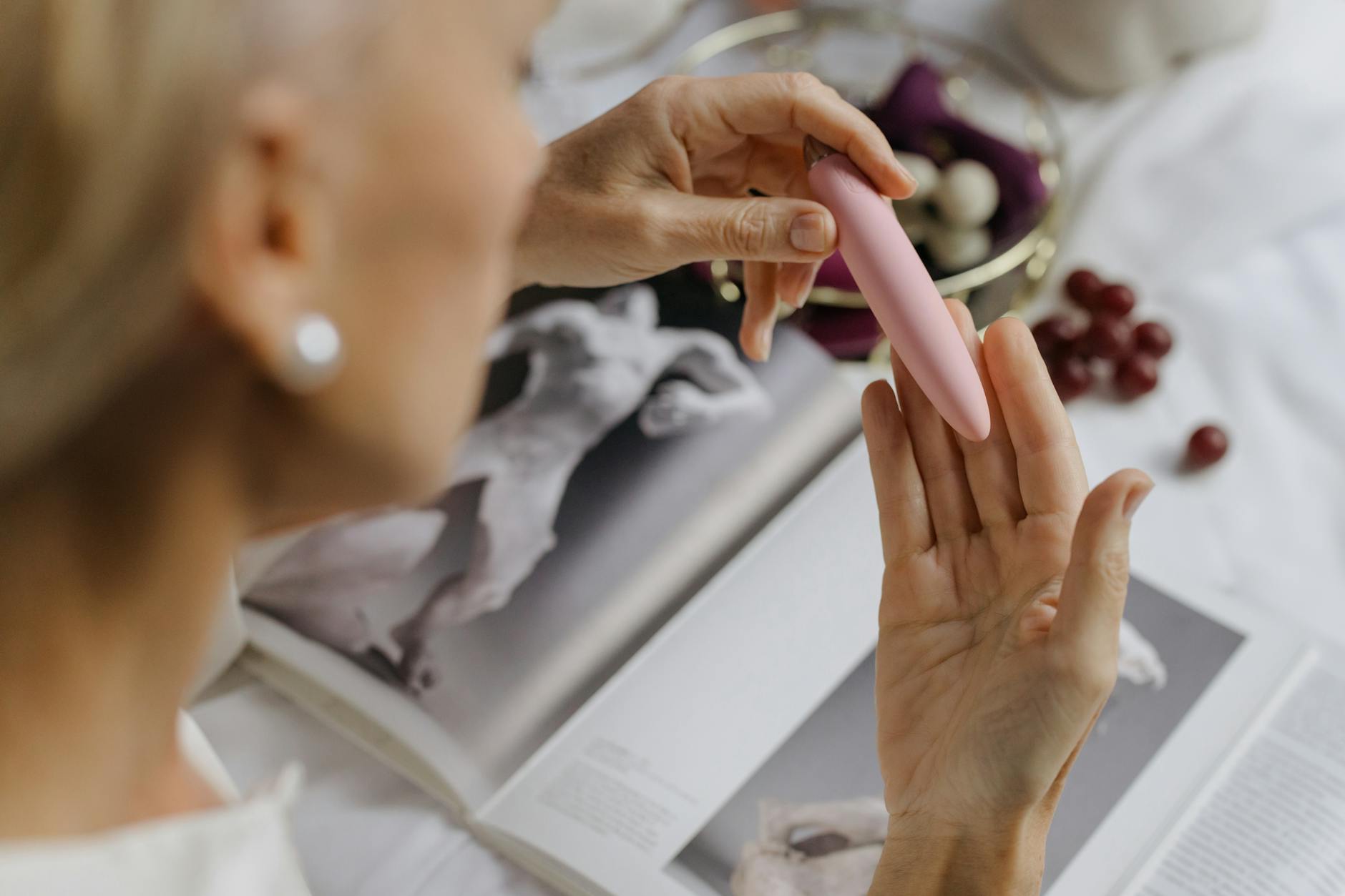
Here's what nobody tells you about pleasure after trauma
Trauma doesn't just live in your mind. It lives in your body. After a relationship marked by boundary violations, coercion, or emotional harm, your nervous system goes into protection mode. Pleasure feels risky. Arousal feels suspect. Touch (even your own touch) can trigger hypervigilance instead of relaxation.
The good news: reconnecting with pleasure after trauma is possible. But it requires a different approach than typical sex advice. It requires going slow, building safety, and using tools that remind you that you're in control.
Why trauma rewires how your body experiences pleasure
When someone has violated your boundaries, your nervous system learns that arousal signals danger. Adrenaline spikes. Dissociation kicks in as a protective mechanism. Your body literally stops responding the way it used to because it's been trained to see pleasure as a setup for harm.
This isn't a mental block you can think your way out of. It's a somatic response. Your vagus nerve, your pelvic floor muscles, your endocrine system all have memory. They need to learn safety again before pleasure can return.
What helps is predictability, control, and low-stakes exploration. A lemon clitoral vibrator designed specifically for your body's response (not for speed or intensity) is one of the gentlest entry points back into sensation.
Why a lemon vibrator works differently for trauma recovery
Most vibrators operate on intensity. You turn them on, and they do what they do. A lemon sucker works on a different principle. It uses rhythmic suction instead of constant vibration, which means:
You control the pattern. You start at pattern one (the gentlest pulse) and stay there as long as you need. There's no pressure to escalate.
Sensation is contained. Suction focuses stimulation on the clitoris without involving the entire vulva, which can feel safer for someone whose nervous system is still in protection mode.
You can pause anytime. If you start to feel triggered or overwhelmed, you turn it off. Instantly. That ability to stop is what builds back trust in your own body.
Intensity can wait. Trauma recovery isn't about achieving orgasm. It's about rediscovering that pleasure can feel okay, that your body can respond without that response being dangerous.
Setting up a safe space for solo exploration
Before you even touch yourself, the container matters.
Choose a time when you're alone and won't be interrupted. Lock the door if that helps. Make the room warm, comfortable, with soft light. Play music if that helps your nervous system relax, or keep it silent. Some people benefit from having their phone nearby (for grounding, not for distraction). Some people need it away.
Be honest about what "safe" feels like in your body right now. If lying down feels too vulnerable, sit up. If you usually need your legs together for security, keep them that way. If you want to stay fully clothed and just explore external sensation, that's valid.
The point: you're not following a script. You're building a ritual around consent with yourself.
Starting with sensation, not sensation
Your first session with a lemon vibrator doesn't have to involve turning it on.
Hold it. Feel its weight. Notice the material. Run your fingers over the shape. Let your nervous system get curious about this object without any pressure to use it "correctly."
When you're ready to turn it on, start at pattern one. You might feel it for five seconds and turn it off. That's enough. Your body is learning that sensation doesn't have to lead anywhere dangerous.
Over days or weeks, you might stay on pattern one for a bit longer. You might notice that certain times of day feel safer than others, or that breathing changes how your body responds. You're collecting data about yourself.
Orgasm is not the goal. Expanding your window of tolerance for pleasure is the goal.
Knowing when to seek professional support
Solo exploration helps many people, but it's not a replacement for trauma-informed therapy. If you're experiencing:
Dissociation (feeling outside your body, numb, or distant) during or after touch, talk to your therapist before continuing.
Flashbacks or panic responses even in safe conditions, you likely need additional support before this kind of exploration is grounding.
Complex shame or guilt around pleasure itself, a professional can help untangle the difference between your body's legitimate protection response and internalized beliefs about your "right" to pleasure.
A lemon clitoral vibrator is a tool. A good therapist is the foundation.
The role of breathwork and nervous system settling
Many trauma survivors hold tension in their pelvic floor without realizing it. Your muscles have tightened to protect you. Before you introduce sensation, teaching your nervous system to downregulate helps.
Try this: breathe in for a count of four, hold for four, exhale for six. The longer exhale signals safety to your vagus nerve. Do this for two minutes before you touch yourself.
While using the lemon vibrator, stay connected to your breath. If you find yourself holding your breath, that's your nervous system saying it's overwhelmed. Slow down or stop.
Some people find it helps to make gentle sounds (a hum, a sigh) while exploring. Others ground themselves by keeping their eyes open and noticing their surroundings. Experiment.
Talking to partners about this process
If you're in a relationship, solo pleasure recovery doesn't mean excluding your partner forever. But it does mean taking time to reconnect with yourself first, without performance pressure or the need to explain what you're feeling in real time.
When you're ready to share, you might say something like: "I'm rebuilding my relationship with my own body. That means I need some solo time to explore at my own pace. This isn't about you. It's about me learning to trust myself again."
A partner worth keeping will understand. If they push back, that's information.
When pleasure starts to feel possible again
At some point, maybe weeks or months in, you'll notice something shift. The vibrator stops feeling like exposure and starts feeling like permission. Your body might respond with genuine arousal. An orgasm might happen, or might not, and you realize that's actually okay.
That's when the lemon vibrator becomes less of a healing tool and more of a pleasure tool. You might want to explore different patterns. You might want to use it differently. You're no longer in survival mode.
Trauma recovery isn't linear. You might have sessions where you regress, where touch feels unsafe again. That's not failure. That's your nervous system still learning. Keep going slowly. Keep checking in with yourself.
Your pleasure matters. Your safety matters more. A lemon sucker designed for control and comfort helps you honor both.
Frequently Asked Questions
Can I use a lemon vibrator if I'm experiencing ongoing relationship trauma?
Not yet, typically. If you're still in an unsafe situation or very early in the aftermath, focus on safety planning and therapy first. Solo pleasure exploration works best when your environment and nervous system feel stable. Talk to a trauma-informed therapist before starting.
What if touching myself triggers memories or panic?
That's a sign your nervous system needs more time and more professional support before self-pleasure exploration. A therapist trained in somatic therapy or EMDR can help you work through these responses. There's no timeline for this. Pushing through panic doesn't build healing. It builds more fear.
Is it weird to use a vibrator as a healing tool rather than for orgasm?
Not at all. In fact, that's exactly how many trauma survivors rebuild their relationship with pleasure. The lemon vibrator becomes a way to practice consent with yourself, to learn that your body can respond to sensation without that response being dangerous. Orgasm is the bonus, not the point.
Can I use lube with a lemon vibrator?
Absolutely. Water-based lube can help with comfort and reduce friction, which is especially important if your body is tense or if you're nervous about sensation. Lube also makes the experience feel less clinical and more intentional.
How long does it usually take to feel pleasure again after trauma?
It depends on the person, the severity of the trauma, and the quality of support you have. Some people feel shifts within weeks. Others take months or years. There's no "right" timeline. Comparing your healing to someone else's will only frustrate you. Trust your body's pace.
What if I want to explore with a partner eventually?
That's great. But do your solo work first. When you've rebuilt your own sense of agency and safety, you'll know what your boundaries are, what feels good, and what doesn't. That makes partnered exploration safer and more honest for both of you. Some people find that using a lemon clitoral vibrator together during intimate time is a gentle way to reconnect if both partners are interested.
Sources
van der Kolk, B. (2014). The Body Keeps the Score: Brain, Mind, and Body in the Healing of Trauma. Penguin Press.
Perel, E. (2018). Mating in Captivity: Unlocking Erotic Intelligence. HarperCollins.
Nagoski, E., & Nagoski, A. (2020). Come as You Are: The Surprising New Science That Will Transform Your Sex Life. Simon & Schuster.
Levine, P. A. (2015). Trauma and Memory: Brain and Body in a Search for the Living Past. North Atlantic Books.