Let's name what's happening
You're in your body, but you're not really home. Maybe life has been loud—work stress, relationship strain, family demands. Maybe something happened that made you feel unsafe in your own skin. Maybe it's just been so long since you felt genuinely present during sex that arousal feels like a foreign language. Disconnection from your body is real, and it's more common than you'd think.
What makes it tricky is that you can't force reconnection. You can't willpower your way back to sensation. And trying to have sex or pursue pleasure while you're in that dissociated space often just makes it worse—your brain registers the gap between what you're trying to feel and what you're actually experiencing, and that gap becomes bigger.
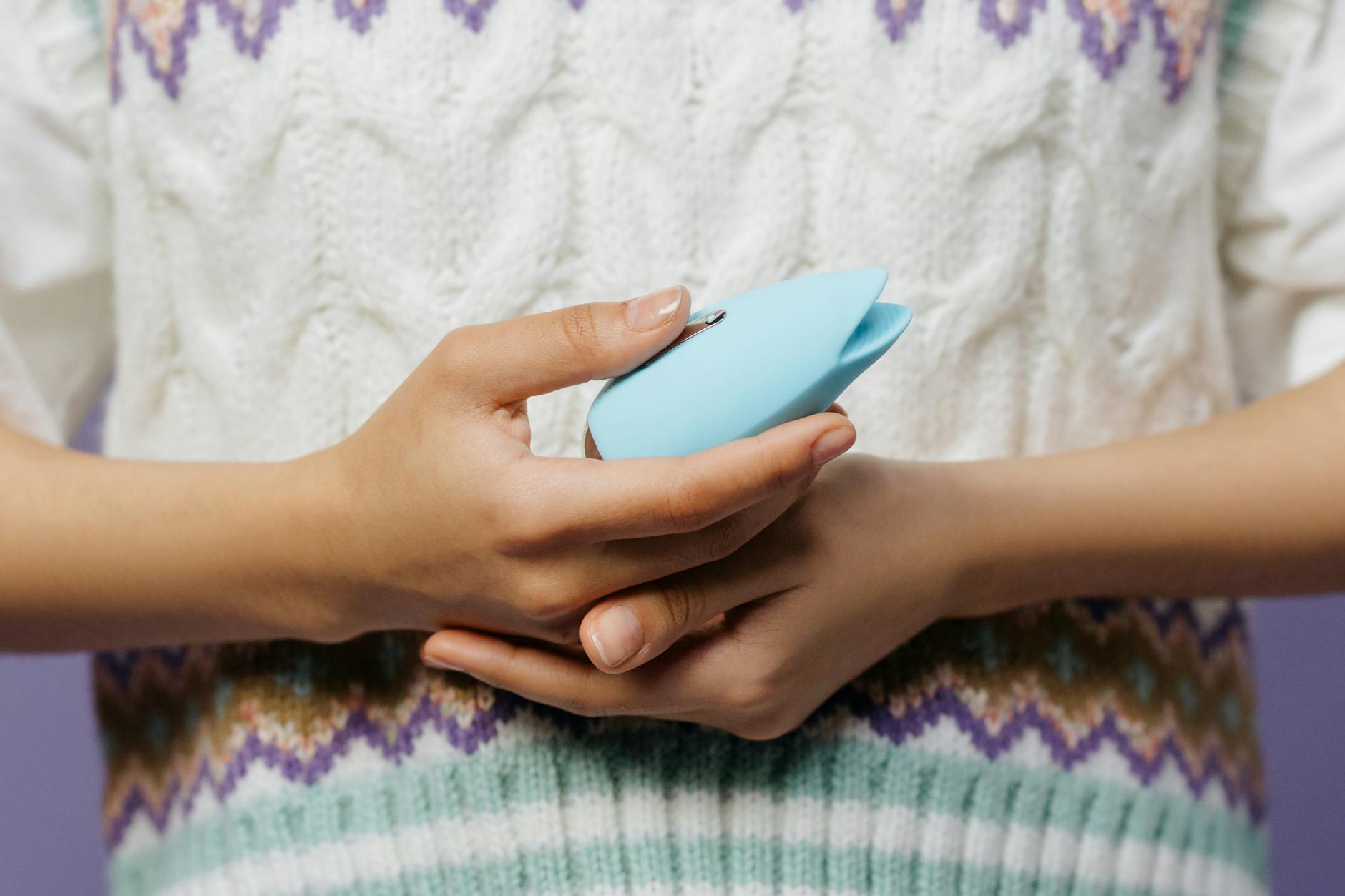
Here's what I see in my practice: a lemon vibrator can actually help you bridge that gap. Not by forcing pleasure, but by giving your nervous system something specific and consistent to pay attention to. It's a tool for rewiring the attention that disconnection has broken.
Why disconnection happens in the first place
There are a few neurological pathways that lead to feeling absent from your body during intimacy.
Depression and anxiety create a kind of cognitive fog that makes sensation harder to access. Your brain is busy running threat loops in the background, and pleasure gets deprioritized. Chronic stress does something similar. Long-term relationship tension can create what therapists call "protective distance"—your body literally walls off sensation as a way to avoid feeling hurt.
There's also what happens after grief, trauma, or illness. Your body becomes something that was done to you, rather than something you inhabit. Reconnecting with pleasure feels almost taboo when your body has been a source of pain.
For some people, disconnection is pharmacological. Certain medications, particularly antidepressants and blood pressure drugs, can numb sensation directly. For others, it's hormonal—low testosterone or estrogen creates a kind of physical fog.
The good news is that none of these reasons make you broken. Disconnection is a symptom, not a permanent state. And it's actually reversible.
Why a lemon vibrator works for this specific problem
Let me explain the neurology first. Sensation has a hierarchy in your brain. Your clitoris has dense nerve endings, and the sensory input from that area gets routed through different neural pathways than, say, your breasts or your thighs. When you're dissociated, you're typically disconnected from subtle sensation. The vibration from a clitoral vibrator is not subtle. It's a strong, consistent signal that your brain literally cannot ignore.
The suction mechanism in a lemon clitoral vibrator creates something even more powerful—rhythmic, pulsing stimulation that commands attention. It's not aggressive, but it is insistent. Your nervous system registers it as something to pay attention to right now.
This matters because reconnection doesn't happen through willpower or intention. It happens through attention. When you redirect focused attention to your body, particularly to an area of high nerve density, you're essentially rewiring the neglect that disconnection created.
A lemon vibrator is also emotionally safer for reconnection than partnered touch. There's no performance pressure, no one to please, no need to manage someone else's feelings while you're trying to feel your own. That psychological safety matters. Your nervous system can actually relax into sensation when it's not also managing social threat.
Starting your reconnection practice
If disconnection is significant, begin with touch before vibration. Spend 5 to 10 minutes touching your body without any sexual intention. This is just proprioception work. Press your hands to your arms, your legs, your belly. Feel temperature. Feel texture. This recalibrates your brain's awareness of where your body is in space.
Then move to the lemon vibrator. Don't have a goal of orgasm. This is crucial. Disconnection deepens when you're chasing an outcome, because you create a new gap: the gap between where you think you should be and where you are. Instead, set a goal of sensation awareness. Can you feel the vibration? Where does it feel strongest? Does the sensation change when you breathe? Can you notice yourself noticing?
Start with the lowest setting. Lemon clitoral vibrators usually have three to five intensity levels, and for reconnection work, you want to begin where you can easily distinguish the sensation without it being overwhelming. Spend 2 to 3 minutes at this level, just paying attention.
Building a rhythm without forcing it
One mistake I see people make is treating this like a race to arousal. Arousal is a gift you'll receive later. Right now, you're just rebuilding the infrastructure of sensation.
Try this: spend one minute on your clitoris. Then pause. Move the vibrator away and notice what your body feels like without it for 30 seconds. Then return. This on-off rhythm actually activates your nervous system more effectively than continuous stimulation. It creates contrast, and contrast is how your brain registers sensation most vividly.
You might spend 15 to 20 minutes in a session doing this. Some sessions you'll feel more. Some you'll feel less. Neither is a failure. Disconnection doesn't usually heal in a straight line. There will be days when you're more present, and days when you're back in the fog. That's normal. Keep showing up anyway.
If you have a partner, you might also ask them to be present in the room while you do this alone—not touching, not performing, just nearby. This helps your nervous system slowly integrate the idea that closeness and body presence can coexist.
When sensation starts to return
After a few weeks of consistent attention, you'll likely notice something shift. You might feel tingles or warmth that you didn't before. You might notice your breath changing. Your body might spontaneously move in ways it hasn't in a long time. These are all signs that reconnection is happening.
At this point, you can slowly increase intensity. Move to setting two or three if the lemon vibrator has multiple speeds. You can experiment with different patterns. Some people find that the pulsing mode on Nancy's Lemon Shop clitoral vibrators works better for reconnection than continuous vibration, because the rhythm gives your attention something to follow.
You might also notice that arousal returns—not because you were chasing it, but because sensation is the door through which arousal enters. Once your nervous system trusts that touch feels safe and present again, desire often follows naturally.
Rebuilding connection with a partner
If you have a partner and you're ready to bring them into this work, communicate first. Tell them what you're doing and why. Tell them that this is about you rebuilding your own capacity for sensation, not about anything being wrong with them or your relationship.
Many partners feel relieved when they understand that disconnection is a symptom they can help address, rather than a referendum on whether they're attractive enough. The first time you use a lemon clitoral vibrator with a partner present, you might ask them to simply observe. No expectations. No assumption that this leads to partnered sex. Let it be what it is.
When you're ready to integrate this into partnered sex, the lemon vibrator can be a bridge. Using it during foreplay, during penetration, or after—there's no wrong answer. What matters is that you're staying present and your partner understands that your use of a vibrator is about you accessing your own body, not about either of you being insufficient.
The timeline for reconnection
Disconnection that's been present for months usually takes weeks to begin shifting. Disconnection that's been present for years can take a couple of months of consistent practice. This isn't a problem to solve in one session. It's a recalibration.
I typically recommend three to five sessions per week, 15 to 20 minutes each, before expecting noticeable change. Consistency matters more than intensity. A 20-minute session twice a week will shift things faster than a once-monthly marathon attempt.
You should also address the root cause if possible. If stress is the issue, stress management helps. If medication is numbing you, talking to your doctor about alternatives matters. If relationship tension created the protective distance, couples work with a therapist can help rebuild safety. The lemon vibrator is a powerful tool, but it works best alongside other changes, not instead of them.
When to seek additional support
If you've been practicing for three months and sensation still isn't returning, talk to a therapist or a medical provider. Persistent anhedonia—the inability to feel pleasure—can be a sign of depression that needs treatment beyond self-help. It can also be a sign of hormonal imbalance, neurological changes, or trauma that needs professional support.
Similarly, if using a vibrator triggers distressing feelings—shame, fear, or intrusive thoughts—that's information. You're not broken, but you might benefit from working with someone trained in trauma-informed sexuality.
Disconnection from your body is one of the most painful experiences you can have. But it's also deeply reversible. A lemon clitoral vibrator, combined with patience and consistent attention, is a concrete way to say to your body: I'm here, I'm staying, and I'm learning to feel again.
People also ask
Can you reconnect with your body if you have anhedonia from depression?
Yes, reconnection is possible, but it often requires treating the depression first or alongside reconnection work. Depression creates anhedonia—the neurological inability to feel pleasure—and trying to force pleasure when depression is still active usually backfires. If you're experiencing persistent inability to feel pleasure across all areas of life, not just sex, talk to a doctor about whether antidepressant medication, therapy, or a combination would help. Once depression starts lifting, using a lemon clitoral vibrator as a reconnection tool becomes much more effective.
How long does it take to feel sensation again after disconnection?
For many people, noticeable shifts begin within two to four weeks of consistent practice (three to five sessions weekly). That said, deeper reconnection often takes longer—up to two to three months—and the timeline depends on how long you've been disconnected and what caused it. Disconnection from stress might shift faster than disconnection from trauma or medication side effects. Progress isn't always linear, either. You might have days where sensation feels vivid and days where it's muted again. That's normal and doesn't mean you're failing.
What if using a vibrator feels like added pressure when I'm already disconnected?
If vibrator use feels like one more thing you should be doing, pause and reframe it. You're not using a lemon vibrator to perform pleasure for anyone, including yourself. You're using it as a sensory feedback tool. Start small—even five minutes counts. And if it doesn't feel right, that's valid information. Some people find that hands-only touch reconnects them faster than vibration. Trust what your body needs.
Can disconnection from your body be a sign of something more serious?
Disconnection paired with numbness in other areas of your life, persistent depressed mood, or intrusive traumatic thoughts can indicate depression, trauma, or other conditions that benefit from professional treatment. Disconnection that started after a specific event or medication might have a clear cause worth addressing with a doctor. Reconnection work with a lemon vibrator is a good tool, but if disconnection is severe or paired with other symptoms, bringing in professional support—a therapist, doctor, or both—makes the work faster and more sustainable.
Is it normal to not feel ready for pleasure during reconnection?
Completely normal. You don't need to be ready for pleasure. You just need to be curious about sensation. The goal of early reconnection work is awareness, not arousal. You're training your nervous system to pay attention to physical sensation again. Pleasure often comes later, as a natural downstream effect of that attention. If you're pushing yourself to feel something you don't yet feel, ease up. You're exactly where you need to be.
Can your partner help with reconnection, or is it better to do this alone?
Both approaches work, and they're not mutually exclusive. Solo work with a lemon clitoral vibrator gives you space to explore sensation without any performance pressure. Partner presence or involvement can help your nervous system integrate the idea that touch and connection are safe. Many people benefit from doing both: reconnection work alone most of the time, with occasional partner involvement as a bridge back to shared intimacy. Check in with yourself about what feels safest right now.
Moving forward
Disconnection from your body is a symptom, not a sentence. It tells you something important about what you've been through or what your nervous system has learned about safety. Using a lemon clitoral vibrator as part of reconnection is one of the gentlest, most direct ways to rebuild that link between mind and sensation. Be patient with yourself. Show up consistently. Your body's capacity for pleasure is still there. You're just rebuilding the pathway home.