
Here's what nobody tells you about ED and sex
Erectile dysfunction lands like a bomb. One partner feels shame. The other feels rejected. The bedroom becomes a place of anxiety instead of connection. And the instinct, for both of you, is to shut down.
But here's the thing: ED is actually a door into a completely different kind of intimacy. Not a consolation prize. A real one.
Why a lemon vibrator changes the equation
When one partner's body isn't cooperating, the pressure gets enormous. The person with ED focuses entirely on performance. The other partner waits, watches, tries not to show disappointment. Sex becomes a pass-fail test instead of a shared experience.
A lemon clitoral vibrator flips this dynamic completely. Suddenly, there's something happening that has nothing to do with his body, nothing to do with his anxiety, and everything to do with her pleasure. For the first time in months, maybe years, sex isn't about whether he can get or stay hard. It's about whether she's having a good time.
This removes the weight. Both of you feel it immediately.
The physical setup that works
Start with foreplay that doesn't involve penetration at all. A lot of couples skip this when ED enters the picture, but that's backwards. Extended foreplay with a lemon vibrator becomes the main event, not the warm-up.
Here's the sequence I recommend:
Phase one: exploration. You're both clothed or partially clothed. He uses his hands on her while she holds the lemon vibrator. There's no goal here. The only job is attention. He watches what makes her breathe differently. She focuses on what feels good, not on managing his anxiety.
Phase two: full attention. He focuses entirely on her pleasure. The lemon vibrator becomes the center. He can use his mouth, his hands, and the toy together. This combination works better than the toy alone because it keeps him engaged and present instead of sidelined.
Phase three: whatever comes next. Maybe penetration happens. Maybe it doesn't. Maybe he's hard, maybe he isn't. It genuinely doesn't matter anymore because pleasure isn't contingent on that one thing.
The conversation you need to have first
Before you bring a lemon vibrator into the bedroom with ED in the picture, you need to talk. Not clinical. Not formal. Just honest.
His fear is usually some version of: "Does this mean you think I'm not enough?" or "Are you only satisfied with a toy?" These thoughts live in the basement of most men dealing with ED, and if you don't address them directly, he'll interpret the vibrator as proof that you're giving up on him.
You need to say something like: "I want us both to feel good. A lemon vibrator isn't a replacement for you. It's a tool that gets us both in the game." And then you need to mean it. Because if you bring the toy in as a workaround or a consolation, he'll sense it.
Conversely, if he's worried about noise or about the mechanics, address that too. Nancy's lemon vibrators are discreet and relatively quiet. Talking through logistics removes another layer of anxiety.
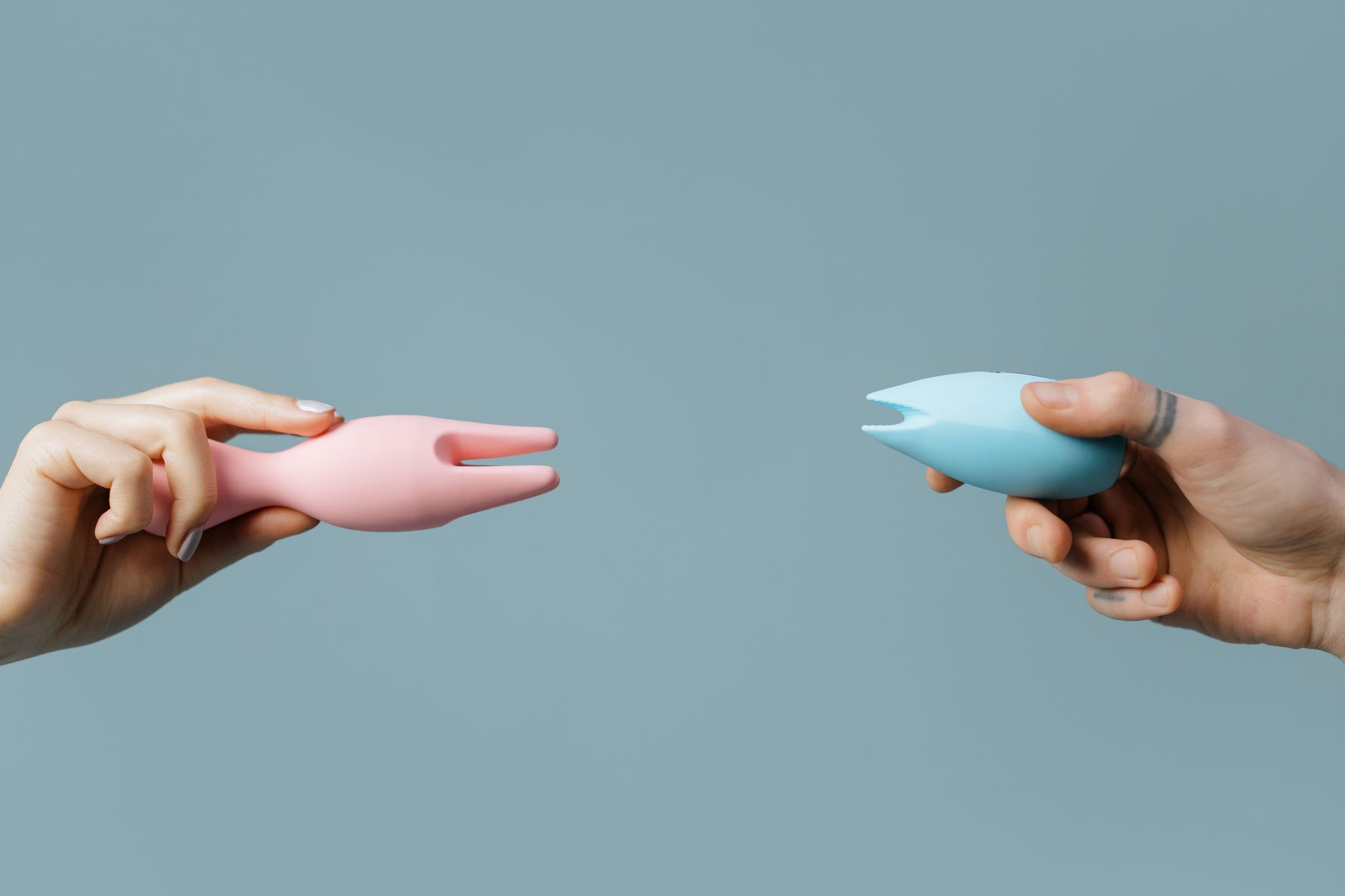 Photo by cottonbro studio on Pexels
What changes in his brain when this works
The shift is psychological and profound. When ED becomes a shared problem instead of his failure, something breaks open. He stops performing. He starts being present. And often, paradoxically, that's when erections start coming back more reliably.
Sex therapists have known this for decades: performance anxiety is the engine that keeps ED running. Every time it doesn't work, the anxiety gets worse. Every time anxiety gets worse, it's less likely to work next time. A lemon clitoral vibrator breaks that cycle because it gives his brain permission to stop working so hard.
That doesn't mean ED disappears overnight. But it means sex stops being a test. And that changes everything.
When to involve a doctor
Look, if he's not already talking to someone about ED, he should be. A good GP or urologist can rule out underlying causes (cardiovascular issues, diabetes, hormonal imbalances) and discuss options. Medication, therapy, lifestyle changes. All of that is worth exploring, and none of it conflicts with using a lemon vibrator.
In fact, removing the performance pressure often makes medical treatment more effective because you're not fighting anxiety at the same time.
The emotional part nobody talks about
ED hits differently in long-term relationships. You've built years of sexual history together, and suddenly that feels broken. There's grief in that, not just frustration.
Using a lemon vibrator together can be a way of saying: "We're not going back to what we had. We're building something new." And sometimes what you build is better because it's more conscious, more deliberate, more about actual pleasure instead of habit or expectation.
Your partner might surprise you. Once the performance pressure lifts, some men discover they actually like being present in a slower, more connected way. Some men feel genuinely aroused watching their partner have an orgasm with a lemon vibrator. That's not less sexy. It's differently sexy.
Logistics that matter
Buy lube. Water-based, quality. The lemon vibrator doesn't require much, but a little makes a difference. Keep it by the bed so it's not awkward to reach for.
Charge the vibrator beforehand. Dead batteries in the moment are a vibe killer.
Talk about what happens after. Does he want to stay engaged? Does she want him inside? Does she just want the vibrator? There's no right answer, but knowing beforehand removes another layer of guessing.
And be patient with the learning curve. The first time feels weird for most couples, even without ED in the mix. By the third or fourth time, it gets easier. By the tenth time, it's just part of your sexual vocabulary.
The truth
ED is hard. It's frustrating. It destabilizes something that felt reliable. But it's also more common than you think, and it's absolutely treatable. A lemon vibrator isn't the whole solution, but it's a powerful part of one because it reframes what sex is supposed to be about.
Pleasure. Connection. The two of you, together, figuring out what works now.
FAQ
Can a lemon vibrator help if my partner has medication-related ED?
Yes. Medications like antidepressants, blood pressure drugs, and antihistamines can affect erectile function. A lemon clitoral vibrator takes the focus off penetration entirely, which means his medication's side effects don't dictate your entire sexual experience. That said, talk to his doctor. Sometimes switching medications or adjusting dosage helps. Sometimes a vibrator is the answer. Usually it's both.
Will using a lemon vibrator make his ED worse psychologically?
No. The opposite. When ED is in the picture, performance anxiety is the actual enemy. A vibrator removes that pressure because pleasure stops being about him maintaining an erection. It's about both of you feeling good. That psychological shift often improves ED over time.
How do I bring this up without making him feel worse?
Lead with connection, not solution. "I miss us. I want to feel good together. I found something I think could help." Make it a team conversation, not a fix you're imposing. Show him the lemon vibrator. Let him ask questions. Give him time. And be clear: this is about both of you, not about his body failing.
What if he refuses to try a lemon vibrator?
Then you might need a different conversation. Sometimes refusal is about shame, sometimes it's about control, sometimes it's about fear. A therapist, especially one trained in sex therapy or couples work, can help you both figure out what's actually happening underneath the refusal. It's worth the investment.
Can lemon vibrators be used if he's on ED medication?
Absolutely. In fact, a vibrator and medication can work beautifully together. The medication addresses the physical side, the vibrator takes the pressure off, and you both get to enjoy yourself. There's no conflict. You're not choosing between them.
What if he gets hard and we want to try penetration?
Then try penetration. The vibrator doesn't disappear. You can use it during, before, after, or not at all. You're building a shared language here, not following a script. The point is flexibility. If something works, do it. If it doesn't, try something else. You're in this together.