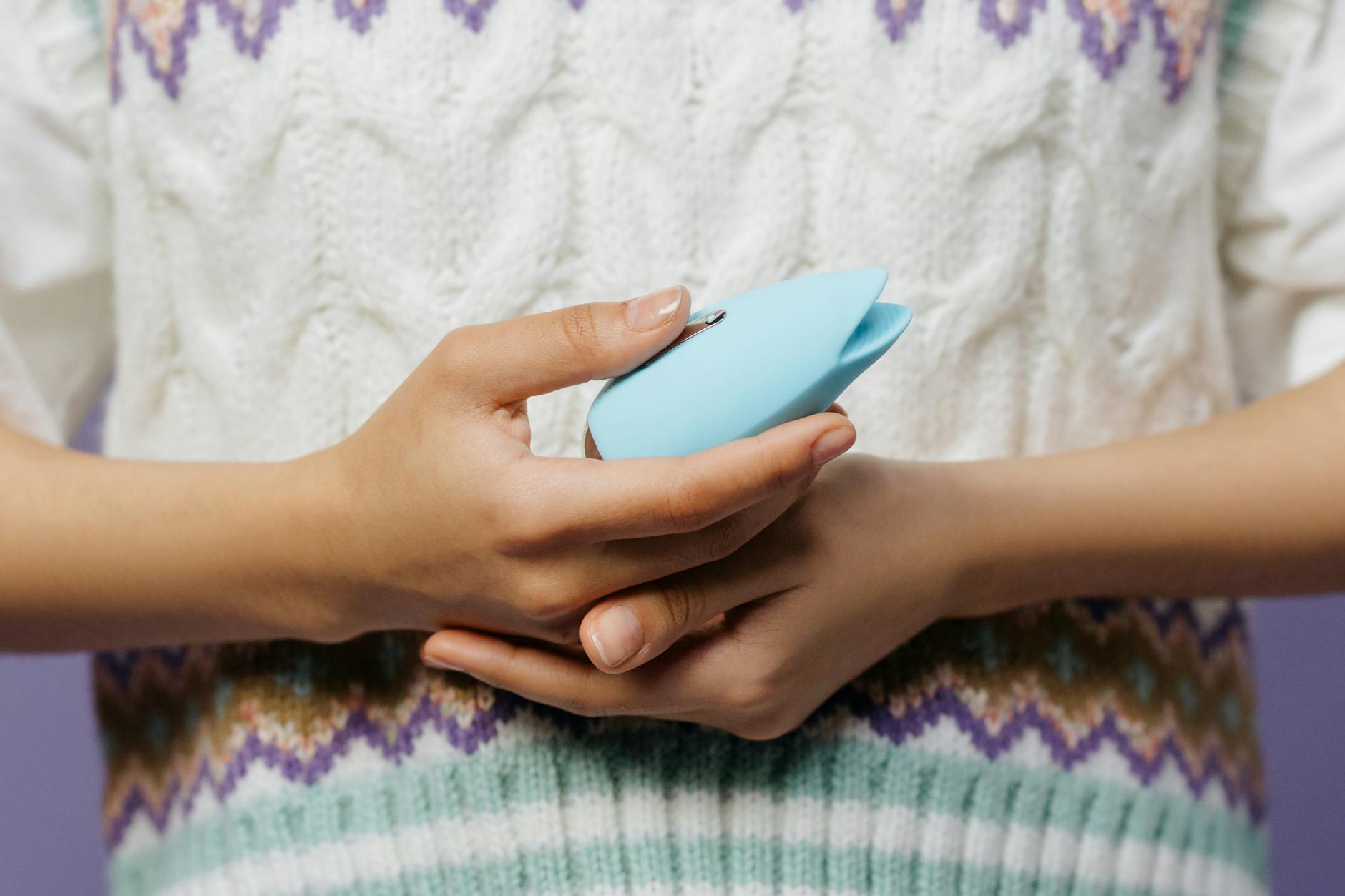
When pleasure stops showing up
Let's be real. Sexual numbness is one of the loneliest things to experience, because you look fine on the outside and feel nothing on the inside. You want to want it. Your partner wants you to want it. Your brain knows the theory of pleasure. And yet. Nothing. It's not that you can't orgasm. Sometimes you can. But it feels muted, distant, like watching your own body from behind glass.
This happens more than you'd think, and it has nothing to do with your capacity for pleasure.
When sensation flattens, the nervous system is often doing exactly what it's evolved to do. Survival mode. Stress, trauma, anxiety, medication, burnout, disconnection from your body. All of these trigger your nervous system to turn down the volume on sensation. It's protective. It's also reversible.
What makes a lemon vibrator useful in this particular context is the way clitoral suction works: it stimulates nerves through a gentler pressure gradient than traditional vibration. For someone whose body is in shutdown mode, that difference matters.
Why your nervous system turns down pleasure
Your nervous system has two main states: safe and unsafe. When your brain perceives a threat, real or psychological, it throttles pleasure signals downward. This is protective architecture.
Common triggers for numbing include chronic stress, unresolved conflict in a relationship, anxiety disorders, depression, trauma history, and certain medications especially SSRIs. Hormonal shifts can do it too. So can simple disconnection. If you've spent years not touching your body or thinking about your own pleasure, your nervous system learns that sensation isn't relevant to survival and stops broadcasting the signal.
The numbing itself isn't the problem. It's the signal. It's your body saying something needs attention.
But here's what matters: numbness is not the same as broken. The nerve endings in your clitoris haven't disappeared. The neural pathways for pleasure haven't vanished. Your brain's capacity for arousal is still there. What's changed is accessibility. Access can shift.
How clitoral suction is different from vibration
Most vibrators work through rhythmic friction and shaking. They're phenomenal for the right moment. But when your nervous system is in shutdown, friction can feel too intense, too invasive, sometimes even painful without the sensation to match it.
Clitoral suction, the way a lemon vibrator delivers it, uses a different mechanism. Instead of vibrating, it creates a gentle rhythmic pulse that expands and releases around the clitoral glans. The sensation is less like a jackhammer and more like a soft, consistent pressure wave.
For someone with reduced sensation, this matters because suction stimulates the sensitive nerve endings in the clitoris through a mechanism closer to oral pleasure. It doesn't require the clitoris to be hypersensitive to register. It works with whatever your baseline is.
Many of my clients who experience numbness report that a lemon vibrator is one of the first tools that helped them feel again. Not because it's magic. Because it met their nervous system where it actually was.
Starting when sensation feels distant
The temptation is to jump to the highest intensity, thinking if you can just push hard enough, you'll break through the numbness. This backfires. Your nervous system will perceive that as invasion and pull back harder.
Here's the approach that actually works.
Start with patterns 1 and 2 on the Lem. These are the gentlest settings. You're not trying to create sensation. You're trying to send a signal to your nervous system that this is safe. You're also not doing this to reach an orgasm. You're doing it to practice sensation.
Spend 10-15 minutes just holding the lemon vibrator against your clitoris at the lowest setting. No agenda. No goal. Your job is to notice what you feel. Pressure. Warmth. Texture. Pulse rhythm. Any micro-sensation counts. If you feel nothing, that's also data.
The nervous system is exquisitely responsive to attention. When you put your awareness on a part of your body, blood flow increases. Nerve density wakes up slightly. You're literally rewiring availability.
Do this three or four times before you even think about increasing intensity.
Building safety in the nervous system
Here's something that won't show up in the toy instructions but absolutely matters. Sexual numbness thrives when you feel unsafe, unsupported, or disconnected from your body. Adding intensity won't fix it. Adding safety will.
This looks like: taking time without pressure, creating physical comfort (good lighting, temperature, no rush), slowing way down, and sometimes talking to your partner about what's happening.
If you're partnered, the numbness conversation is critical. Your partner may think they've done something wrong. You may think you've broken. Clarity on both counts unlocks a lot. How to Use a Lemon Vibrator When You Want to Reconnect Sexually With Your Partner covers that bridge in detail.
If you're solo, safety looks like consent with yourself. Giving yourself permission to feel whatever you feel. Not forcing a timeline. Treating sensation like you're learning it for the first time.
Sexual numbness is not a life sentence. It's a symptom. And symptoms can shift when you treat the underlying issue.
When to bring a partner into the experience
You don't have to explore this alone. And often, reawakening sensation is easier with a partner who's patient and present.
If you decide to explore with a partner, start the same way you would solo. Low intensity. No agenda. The partner's job is to be there, not to perform or push for results. This is different from normal partnered sex. It's less intimate choreography and more nervous system recalibration.
Some people find that external witness changes things. Your partner watching you explore pleasure, not requiring anything from it, can itself be an act of safety. Other people find that more pressure. Know yourself.
Medication and sensation
If you're on an SSRI, certain blood pressure medications, or antipsychotics, numbness is a known side effect. This isn't something a lemon vibrator will fix on its own. But it can help. Suction stimulation is gentler than vibration, which means you're more likely to actually feel something.
If medication is the culprit, talk to your prescriber. There are sometimes alternatives. There are also sometimes doses that work better. And sometimes the medication is necessary and you just need tools that work with the constraint.
A lemon vibrator isn't a replacement for that conversation. But it can be part of the strategy.
Patience as the actual tool
Reawakening sensation doesn't follow a timeline. Some people feel a shift in two weeks. Some take two months. Some need to address the underlying stress or trauma first, and sensation follows later.
This is frustrating information if you want a three-day fix. But it's also freeing, because it takes the pressure off. You're not racing toward orgasm. You're practicing presence in your body. That's the actual work. Orgasm becomes possible as a side effect.
The people who experience the biggest shifts are the ones who approach this like a skill to relearn, not a problem to solve. There's a difference.
One practical thing that helps: keep a one-line note after each session. "Felt warmth in outer labia." "Noticed pulse in clitoris." "Felt nothing but less anxiety than last time." These micro-shifts are real. They compound.
When numbness signals something deeper
If you've worked consistently with a lemon vibrator at varied intensities over six weeks and sensation hasn't budged at all, something else might be at play.
Trauma responses can create numbing that won't shift with sensation practice alone. Severe depression can flatten pleasure in ways that require intervention beyond toys. Relationship wounds can block access to pleasure even when the nervous system is technically fine.
None of these are failures. They're just signals that you might need support beyond what this article can offer. A sex therapist or somatic practitioner can help. So can a couples therapist if your relationship is part of the picture.
If you're taking medication and suspect it's responsible, your doctor is the right conversation. If you think past trauma is involved, a trauma-trained therapist can work with your nervous system in ways I can't.
A lemon vibrator is a tool. A good one. But it's part of a larger picture, not the whole picture.
FAQ
Why does clitoral suction feel different than vibration when I'm numb?
Clitoral suction creates a gentler, more gradual stimulation through rhythmic pressure rather than rapid vibration. For a nervous system in shutdown, this lower-intensity approach often feels more accessible and less jarring. The suction mechanism mimics oral pleasure, which tends to register even when sensation is muted.
Can a lemon vibrator work if I'm on antidepressants?
Yes, though it's not a cure for medication-related sexual side effects. Clitoral suction can help because it's gentler than traditional vibration. But you may also need to explore medication timing changes, dosage adjustments, or alternatives with your prescriber. A lemon vibrator is a useful tool alongside those conversations, not instead of them.
How long does it take to feel sensation return?
It varies. Some people notice shifts within two to three weeks of consistent exploration. Others take two months. And sometimes sensation returns more noticeably once underlying stress or relationship issues are addressed. Numbness is a signal, not just a mechanical problem, so timelines are individual.
Should I use a lemon vibrator alone or with my partner when I'm experiencing numbness?
Both approaches work. Solo exploration gives you a chance to listen to your own body without performance pressure. Partnered exploration can add the safety of witness and connection. Start however feels least threatening. You can always add a partner later, or go solo if partnered feels like more pressure.
What if I try a lemon vibrator and feel nothing at all?
First, that's normal for severe numbness. Second, you're still sending a signal to your nervous system that sensation is possible and safe. The absence of feeling doesn't mean nothing's happening. Keep a small note of any micro-changes: less anxiety, slight warmth, different quality of nothing. These are real shifts.
Is sexual numbness permanent?
No. Numbness is your nervous system's response to a stressor or perceived threat. When the underlying cause shifts (stress decreases, safety increases, relationship improves, medication changes), sensation typically returns. It's not a life sentence, even when it feels like one.
Your pleasure matters. And your body's ability to feel it is more resilient than you might think right now. Start small, be patient, and reach out for support if numbness is tied to something deeper. A lemon vibrator can help. But so can you, for yourself.