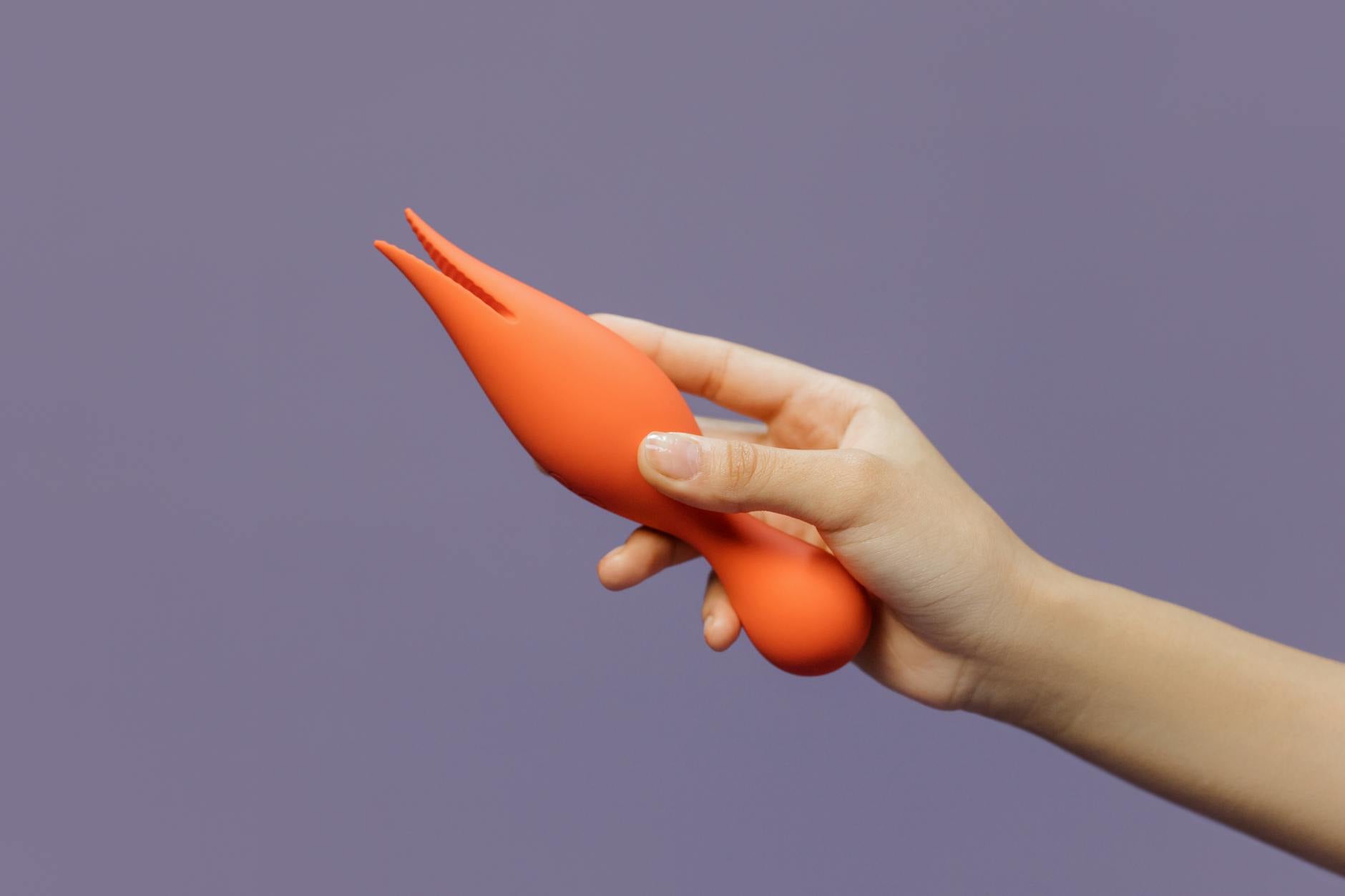
Here's the thing about partners discovering toys together
One of you wants it. The other person is... cautiously open. Or skeptical. Or worried it means something about the relationship that probably isn't true. This is the exact moment where most couples either fumble forward awkwardly or abandon the conversation entirely. And honestly, that's a shame, because this is also the moment where things get really good.
I've worked with hundreds of couples navigating this exact transition. The ones who succeed have one thing in common. They separate the conversation about toys from the conversation about desire, trust, or adequacy. A lemon vibrator isn't a commentary on your partner. It's a tool that does something your hand, or their hand, or penetration alone simply cannot do. Full stop.
Why your partner might be hesitant (and what actually helps)
Before you even open the box, understand the three things your partner might be secretly worried about.
The first is replacement anxiety. He's worried the vibrator will feel better than he does, or that you'll prefer it. This is rarely about the toy. It's about feeling needed. The antidote isn't reassurance ("You're still my favorite") because that sounds like you're consoling him. The antidote is framing it together. "This does one thing I can't do alone. That doesn't make it better. It makes it different. And I want to explore what that feels like with you."
The second is performance pressure. She might worry that if you introduce a toy, you're hinting that something isn't working. That you're unsatisfied. That she should be doing more or feeling more. The truth is usually the opposite. Most people introduce toys because they want to share something new, not because the current situation is broken. Say that directly: "I'm happy with us. I'm also curious about this."
The third is practical embarrassment. They're worried about how to use it, where to hold it, what happens if it makes a weird noise, whether lubricant gets everywhere. These worries feel silly, so they don't name them. But they're the ones that actually matter. Address them head-on: "We'll figure it out together. It's probably less graceful than we think. And that's fine."
Why lemon vibrators hit different for skeptical partners
If your partner has never used a vibrator, or used one years ago and found it too intense, a lemon clitoral vibrator might genuinely surprise them. Here's why air-suction toys work where other vibrators fail.
Traditional vibrators create direct percussion. They buzz against tissue. For people with lighter sensation, or those with nerve variations, or anyone who finds direct vibration overwhelming, that feeling can go from pleasant to numbing or even painful surprisingly fast. Your nervous system adapts. The sensation plateaus.
A lemon sucker works differently. It creates gentle suction that stimulates without direct percussion. Instead of a rapid vibration against one spot, you get a pulling sensation that engages the broader nerve network of the clitoris. For skeptics, this often feels less "mechanical" and more like an extension of manual touch. The learning curve is shorter. The intensity is more intuitive to control. And crucially, it doesn't numb out as quickly.
I've had partners tell me, "I thought sex toys were all vibration. This feels nothing like what I expected." That's the reaction you're often aiming for. When someone's first experience with a toy isn't what they braced themselves for, the whole conversation shifts from anxiety to genuine curiosity.
How to introduce it without the pressure moment
Don't announce it. Don't build it up. Don't buy it and then surprise them mid-sex.
Instead, bring it up when you're both relaxed and clothed. Midmorning coffee, after dinner, in the car. Somewhere neutral. "I've been thinking about trying something. I found this lemon vibrator. It's supposed to work differently than other toys. I'm curious if we could explore it together."
Note what you're not doing. You're not asking permission. You're not making it contingent on their enthusiasm. You're not apologizing. You're stating a preference and inviting collaboration.
Their response might be "Okay, let's try it" or "I need to think about that" or "Can I read about it first?" All of these are fine. What's not fine is "Well, if you really want to." That's resentment talking. If your partner is genuinely uncomfortable, revisit the conversation in a few weeks. Pressure doesn't convert skeptics. Patience and trust do.
The first time actually using it together
Set aside maybe 30 minutes. Have lubricant nearby. Charge the toy completely beforehand. (Nothing kills momentum like a dead battery.)
Start with just touching it. Hold it together. Look at how it's designed. Turn it on at the lowest setting with the cover off so you can see how the suction mechanism works. This sounds silly, but it removes mystery. The mystery is usually scarier than the reality.
Then let your partner hold it. Not on anyone's body yet. Just in their hand. Feel the weight. The vibration. The suction at different settings. This gives them control and a sense of what they're working with.
When you're both ready, start with external stimulation only. No penetration. Just the toy on the vulva, starting at the lowest setting. It will probably feel different than you expected too. Lighter. More focused. For many people, it takes a few minutes to understand what the sensation even is.
Your partner's role here isn't to make something happen. Their role is to be present and witness your response. This is where the replacement anxiety either evaporates or gets real. If you're genuinely enjoying something and they're watching you enjoy it, the threat narrative usually falls away. You're not comparing. You're exploring.
What to expect afterward (emotionally and physically)
You might feel tender. Air-suction toys are efficient. More efficient than most partners might expect. If you usually need 20 minutes to reach climax, you might need five. This catches people off guard. It's fine. Adjust how long you use it. Adjust the intensity.
Your partner might feel a weird mix of relief and ego-check. Relief because you're still you, and they didn't magically become obsolete. Ego-check because, yeah, a toy can sometimes do in five minutes what took them 20. That's not sad. That's data. It's useful information about your own body that you can now share with them.
The emotional part matters more. Check in. Not "Did you like that?" but "How are you feeling about that?" There's a difference. One is evaluation. The other is connection.
Building a pattern, not a dependency
Don't use the lemon vibrator every single time you have sex. Introduce it maybe once or twice a week initially. Let your body and your relationship develop a relationship with it gradually. This prevents a few things.
First, it prevents your body from adapting too quickly and needing it for arousal. Your nervous system is brilliant at pattern recognition. If the vibrator is always there, it can become the anchor for pleasure. You want options.
Second, it keeps your partner from feeling like they've been replaced. If toys are occasional, they're collaborative. If they're routine, they can start to feel like a substitute for physical touch.
Third, it keeps the practice interesting. Novelty matters in long-term relationships. Using the toy intermittently preserves that.
When your partner discovers they love it too
This happens more than you'd think. Someone who was hesitant about the toy discovers they love holding it. They love seeing what it does. They love having a tool that lets them give their partner something they couldn't create with their hands alone.
If this happens with your partner, don't oversell it. Just follow their lead. Let them explore the settings. Let them figure out the angles. Let them discover what they enjoy about the experience. If your partner is curious, how to use a lemon vibrator for better pleasure with a new sexual partner has more about deepening that shared exploration.
Handling the awkward moments (because they will happen)
The suction might feel ticklish instead of pleasurable at first. The noise might be louder than expected. Someone might bump the toy with their leg and accidentally change the setting. Lubricant might get where it shouldn't. Your leg cramp might kill the mood.
All of this is normal. None of it means you're doing it wrong. The couples I work with who have the best experiences are the ones who laugh at the awkward moments instead of treating them as failures.
If something doesn't feel good, speak up immediately. "That angle isn't working. Let's adjust." Not "This isn't working" (which sounds global) but "This specific thing isn't working." Small reframe, huge difference.
The conversation underneath the conversation
Introducing a toy to a partner who's skeptical is really about trust. It's about saying, "I want to explore something with you, and I trust you enough to be clumsy and curious together." That's vulnerable. That's also what deepens relationships.
The lemon vibrator is just the vehicle. The real shift is the willingness to have a conversation about desire that goes beyond what's already familiar. That's the part that matters most.
FAQ: Partners and lemon vibrators
Why does my partner feel threatened by the idea of a toy?
Most partner anxiety isn't really about the toy. It's about change, uncertainty, or feeling like there's something wrong with what already exists. The antidote is explaining that you're adding something, not replacing something. "I want this to expand what we do, not change what we already have."
Can a lemon sucker be used by both partners during sex?
Absolutely. Some couples use the toy on the receiving partner and then switch. Others have one partner hold it while the other moves into it. It depends on what feels natural to you both. Experiment and see what works.
What if my partner wants nothing to do with it?
Then you have a choice to make about how important this is to you. If it's central to your pleasure, that's a valid conversation to have. If it's nice-to-have, it might be something you use alone, and your partner gets to opt out of that part of your sexuality. Both approaches are fine. It depends on what you both actually want.
How do I know what setting to use the first time?
Start at the lowest setting. Every. Single. Time. You can always turn it up. You can't un-feel something that was too intense. Low and slow builds anticipation and lets you understand the sensation clearly.
Will using a lemon vibrator change how I experience pleasure with my partner?
Not necessarily. What it does is give you new data about what your body enjoys. That's useful information. You might discover you like different rhythms, or different types of touch, or different combinations. Those discoveries make you a better communicator in bed, not a worse one.
What if the lemon vibrator makes orgasm happen too quickly?
That's not a problem. That's information. You now know your body is capable of that response under those conditions. You can choose to use that knowledge to vary things up. You can slow down, try different angles, or introduce it later in your session to finish with rather than start.
Here's what actually matters
Your partner's willingness to try something you're curious about is a gift. Treat it that way. Go slow. Pay attention. And remember that the toy is just an object. The real pleasure comes from the conversation, the trust, and the willingness to be a little clumsy together while you figure something new out. That's what builds connection. The toy just makes the whole thing easier to explore.