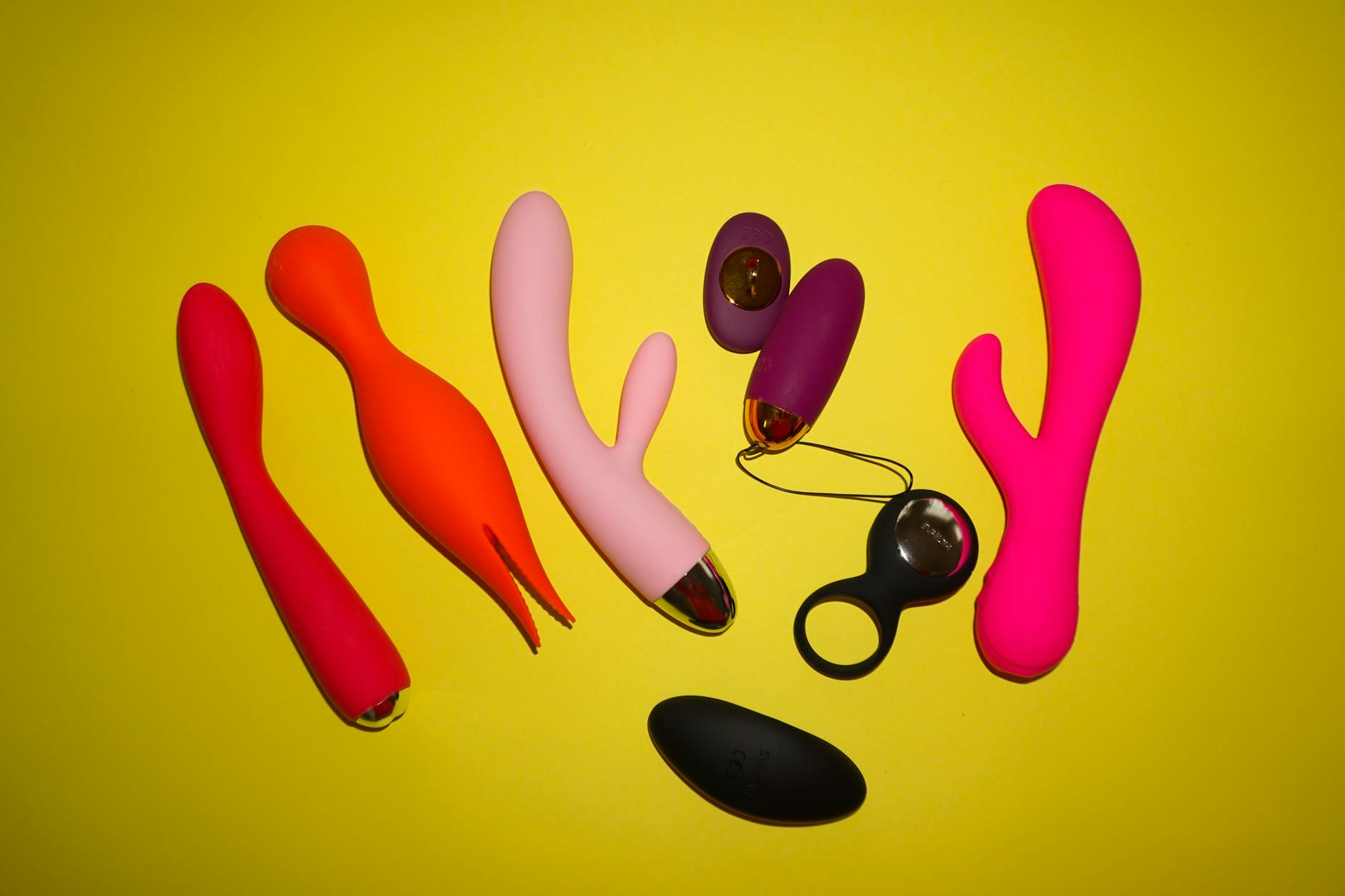
Let's talk about what anxiety actually does to your body
Anxiety doesn't just make you feel worried. It hijacks your nervous system, flips on the fight-flight-freeze response, and essentially tells your body that orgasm is a luxury it can't afford right now. Blood flow redirects away from your genitals and toward your muscles. Your mind goes somewhere else entirely. It's not that you don't want pleasure. Your body is literally unavailable for it.
The frustrating part? You know logically that you're safe. You might want to feel close to yourself or your partner. And yet nothing happens. This is wildly common, especially for people managing ongoing anxiety, stress, or even just the everyday baseline of scrolling through catastrophe before bed.
Why traditional advice doesn't work
Most guidance says "relax and let it happen," which is useless because telling an anxious person to relax is like telling someone in a cold pool to warm up through willpower. Your nervous system doesn't respond to should.
What does work is something different. You need a tool that bypasses the thinking part of your brain entirely and speaks directly to your nervous system. That's where clitoral vibrators come in, and specifically why air-suction devices like the Lem are such game-changers for anxiety-blocked arousal.
How suction changes the equation
Here's the neurology that matters. When anxiety is active, your body needs intense, consistent sensory input to override the freeze response. Traditional vibration works, but suction is different. It creates a continuous, predictable pattern of gentle pressure that your nervous system can lock onto. It's like a rhythmic anchor.
Instead of waiting for arousal to build (which won't happen while you're anxious), the Lem's suction pattern actually creates the physiological markers of arousal. Blood flow increases. Tissue engorgement happens. Your body starts to catch up with the physical experience rather than chasing an emotional feeling that may not come first.
This matters because anxiety sufferers often reverse the usual sequence. Instead of desire leading to physical response, physical sensation leads your brain out of the anxious loop. You feel the suction, your body responds, and then your mind finally quiets down enough to experience pleasure.
Setting up your environment for success
When anxiety is in the mix, your surroundings matter way more than anyone admits. Here's what actually helps.
Privacy is non-negotiable. Not just physical privacy, but the absolute certainty that nobody will interrupt. Close the door. Put your phone in another room or on do-not-disturb. Tell a partner you need solo time. Your nervous system won't settle if there's any chance of intrusion.
Temperature and comfort. Anxiety tightens muscles, especially in your shoulders and pelvic floor. A warm space, warm hands, maybe a soft blanket nearby. Not because you need to be pampered, but because cold, tension, and discomfort all feed anxiety. Warmth is a signal to your nervous system that you're safe.
Lighting. Harsh overhead light reads as alertness. Dim or warm lighting signals that the threat level is low. This is neurological, not aesthetic.
No agenda. This is critical. Tell yourself right now that if you reach for a lemon vibrator and nothing happens, that's fine. The goal is to practice reconnection with sensation, not to force an orgasm. Orgasm is the bonus, not the requirement.
The actual technique when anxiety is high
Start small. Hold the Lem in your hand for a minute without turning it on. Feel the weight. Feel the silicone. This primes your nervous system to anticipate sensation without demanding it.
Turn it on at the lowest setting. Not because you want to build gradually (you don't; that's old advice for people who aren't anxious). Turn it on low so you can adjust upward if you need to, but honestly, many anxious people find that low-to-medium suction is the sweet spot. It's intense enough to override the anxious chatter in your head but not so intense that you feel pressured to perform.
Place it against your clitoris and then just let it sit there. Don't thrust, don't search for the right angle, don't monitor whether you're close. Your one job is to notice what you feel. Not to judge it, not to make anything happen. Just notice. "I feel gentle suction. I feel my body responding slightly. I notice my breathing." The attention itself bypasses anxiety because you can't be in panic mode and sensory-present at the same time.
Many people with anxiety find that suction vibrators like those from Nancy's Lemon Shop work better than traditional bullet or wand vibrators precisely because the sensation is so specific that it commands your attention. Your anxious brain can't multitask while processing something that distinct.
What to do if anxiety still interrupts
You might be using the lemon clitoral vibrator perfectly and your mind still spirals into a thought. "Am I taking too long? Does my body look weird? What if I never feel pleasure again?" This is normal. Anxiety is persistent.
When it happens, don't fight it. Don't stop and start over. Just gently redirect your attention back to sensation. Feel the suction. Feel where your body is touching the surface beneath you. Feel your breathing. This redirection is the skill, not the absence of anxious thoughts.
Some people benefit from naming what they're observing. "I notice I'm thinking about work. Now I'm noticing the sensation of suction. Now I'm noticing my breath." This keeps you in your body without judging the anxiety itself.
When to add a partner (and how)
If you're in a relationship and want to use a clitoral vibrator with someone present, anxiety often spikes even higher. You're managing your own nervous system plus the pressure of being watched or judged.
If this is you, start solo first. Get familiar with how your body responds to the Lem without an audience. Once you've had even one experience where it worked, you have proof that your body can do this. That proof is powerful.
When you're ready to include a partner, tell them explicitly: "I'm using this because anxiety blocks my arousal. I need you to be present but not directive. You're here to hang out, not to make something happen." A partner who understands the goal is comfort and reconnection, not performance, can be genuinely helpful.
Read together about how clitoral suction is totally new if neither of you has used this kind of device before. Shared knowledge reduces performance pressure.
The neuroscience you should know
Anxiety and arousal are both high-activation states, but they're running on different neural pathways. Arousal engages your parasympathetic nervous system (rest-and-digest). Anxiety engages your sympathetic nervous system (fight-flight-freeze). They genuinely can't both be fully active at the same time.
This is why generic advice like "just relax and be present" fails. You're not switching off anxiety with willpower. You're flooding your sensory system with input strong enough that the arousal pathway wins the competition for your nervous system's attention. Suction vibrators are good at this because they're constant, they're unmissable, and they mimic natural sensations in a way that feels real to your body.
Managing the shame layer
Many anxious people also carry shame about their anxiety affecting their sex life. You might feel broken, or like you're letting a partner down, or like you should just be able to push through it.
You can't, and that's not a flaw. Anxiety is not a character defect. It's a nervous system state, and it's treatable. Using a tool like a lemon vibrator isn't working around the real problem. It's actually addressing the real problem, which is that your body needs specific sensory input to feel safe enough for pleasure.
If anxiety is severe enough that it's affecting most of your life, working with a therapist who specializes in anxiety (particularly somatic or nervous system-based therapy) can be genuinely transformative. A vibrator is a useful tool. Professional support can address the root.
But here's what I know from years of working with couples: people who struggle with anxiety often have the deepest capacity for presence and connection once their nervous system settles. You're not broken. You're building.
Quick troubleshooting
If you're using the Lem and it doesn't feel like anything, first check: are you using water-based lubricant? Dry tissue means less sensation, which means your anxious brain has nothing to lock onto. Add lube.
Second: are you giving yourself permission to build up slowly to higher settings? Some people find that starting at setting 5 or 6 (instead of 1) cuts through the anxiety better. Your nervous system needs enough intensity to be interesting.
Third: is your pelvic floor clenched? Anxiety tightens everything down there. Before you turn on the vibrator, spend thirty seconds just breathing and consciously relaxing those muscles. Not aggressively. Just notice the tension and let it soften. This makes sensation more accessible.
If nothing changes after several attempts, that's information, not failure. Your particular anxiety might respond better to a different approach or to professional support. That's okay. You're still learning.
FAQ: Anxiety, arousal, and clitoral vibrators
Can I use a lemon vibrator if I'm on anxiety medication?
Yes, absolutely. Many anxiety medications (SSRIs especially) can reduce sensation and orgasm responsiveness as a side effect. That's where the intensity of suction vibrators like the Lem becomes an advantage. The consistent, powerful sensory input can help your body respond even when medication is dampening baseline sensation. If you're noticing new sexual side effects from medication, mention it to your prescriber. Sometimes switching timing or adjusting dose helps without changing the medication itself.
Is it normal that I feel more anxious when I try to masturbate?
Completely normal. Masturbation requires you to be alone with your own nervous system, which means there's nobody and nothing to distract you from the anxiety. Using a vibrator can actually help because it gives you sensory input to focus on instead of your anxious thoughts. It's not that you're doing something wrong. It's that you need a stronger anchor.
How long should I use a clitoral vibrator when I'm anxious?
There's no time limit. Some people feel their nervous system settle in three minutes. Others need fifteen or twenty. If you're using it and feeling more relaxed (even if you haven't had an orgasm), that's working. If you've been at it for thirty minutes and you feel more tense, stop and try again another day. Your body knows.
Will using a vibrator make my anxiety worse long-term?
No. In fact, the opposite is usually true. Every time you use a vibrator and experience pleasure or calm despite anxiety, you're proving to your nervous system that safety and sensation are possible. That proof accumulates. Many people find that consistent use actually reduces baseline anxiety over time because they've rewired some of the fear around their own body.
What if I use a lemon vibrator and feel nothing but more shame?
Take a break. This might not be the right tool for you right now, or this might not be the right time. Shame is a sign that something is off. That could be that you need a different approach, that you need professional support first, or that you're putting too much pressure on the experience. Pleasure should never feel like an obligation. If you're forcing it, stop.
Can anxiety medication and a clitoral vibrator actually work together?
Yes. Some people find that medication stabilizes their anxiety enough that they can then use tools like vibrators effectively. Others find that the medication itself dampens sensation, so they need more intense input from the vibrator. It's individual. But there's no conflict between the two. They're working on different levels of your nervous system.
What comes next
Using a clitoral vibrator when anxiety is blocking you isn't about forcing pleasure. It's about giving your nervous system something specific to focus on while you learn that safety and sensation are possible together.
If you're struggling with how anxiety affects intimacy with a partner, exploring how to use a lemon vibrator when reconnecting with a long-term partner might help you rebuild that connection.
Your body isn't broken. Your nervous system is doing exactly what it's supposed to do when it perceives threat. The work is teaching it that pleasure is safe. That takes time, but it works.