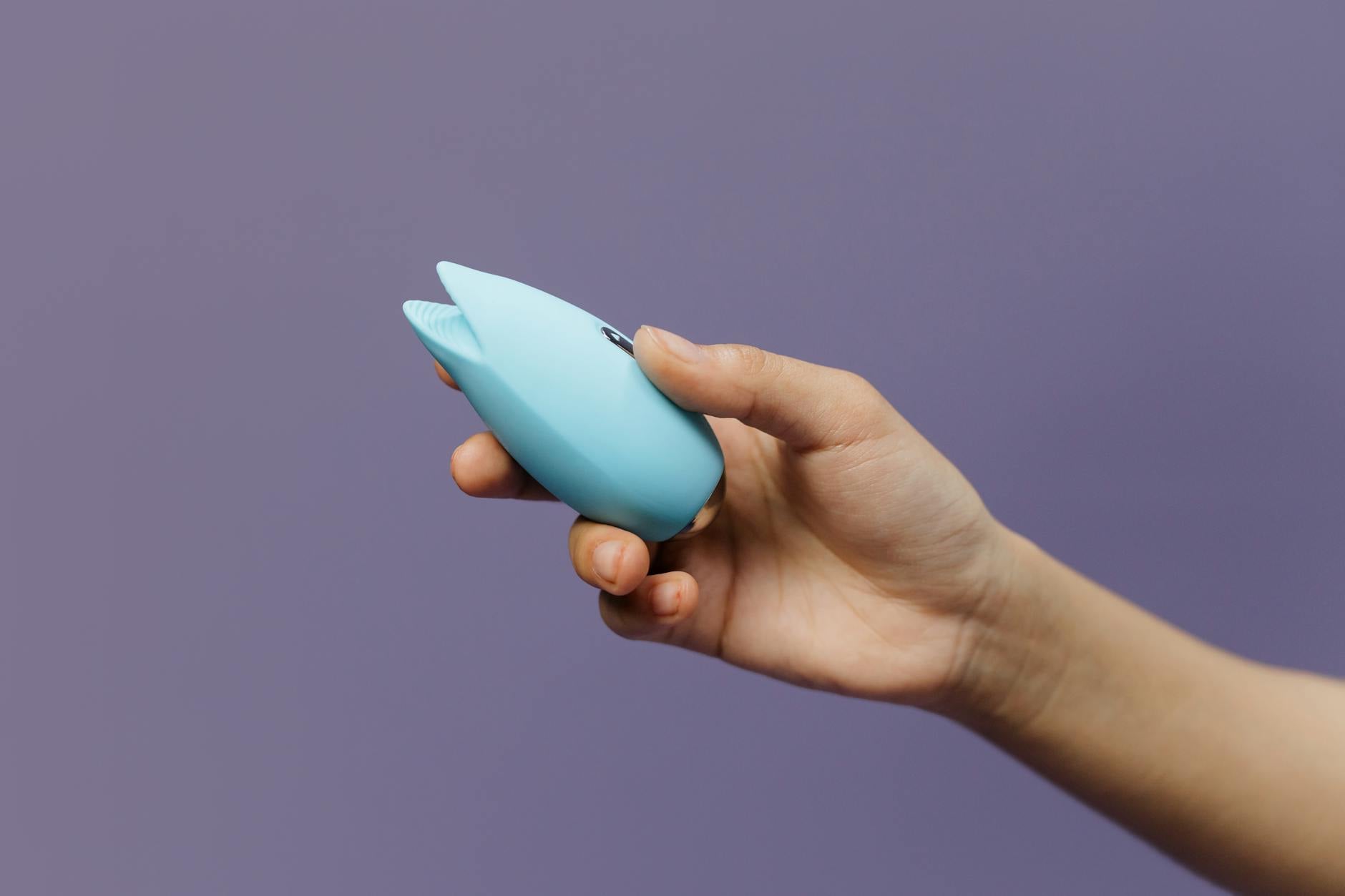
The part nobody says out loud
You like someone new. The chemistry is there. And somewhere in the back of your mind is a thought that goes something like: "I really love my lemon vibrator, but how do I introduce that without this person thinking I'm weird or that I don't want them?"
Here's what I tell clients in my practice: the awkwardness you're imagining is almost always bigger than the actual moment. Most of it lives in your own head.
Why you're nervous, and why you shouldn't be
There are three fears tangled up in this moment. Let me name them so they lose some power.
Fear one: rejection. You worry they'll think the toy means you're not satisfied with them. Logically, you know that's not true. But the fear is still there.
Fear two: judgment. You might worry they'll think you're too much, too experienced, too forward, too something. Again, the actual person in front of you probably won't think any of that.
Fear three: breaking the mood. Bringing up a vibrator feels clinical, awkward, mood-killing. Except it doesn't have to be any of those things if you frame it right.
The truth is simpler: a partner worth staying with will not think you're weird for having a body that knows what it likes. In fact, they'll probably find it hot.
The conversation starter that actually works
Forget the fancy lead-in. Don't rehearse. Don't make it a big production. The naturalness is what makes it work.
You can say something like: "I get a lot out of using a vibrator, and I'd love to use it with you sometime." That's it. Not a question. Not apologetic. A statement of what brings you pleasure.
If they ask why, you can explain: "It helps me relax and get to a place where I can have really good orgasms. I think it could be fun to explore together." You're not saying "because you're not enough." You're saying "because this is what my body needs, and I want to share it with you."
If they seem hesitant, you can lean in with curiosity instead of defensiveness. "What are you thinking?" often opens a conversation better than launching into reassurance. Let them articulate the worry. Usually it's something fixable: "I worry I'll feel like I'm not doing it right" or "I'm not sure what my role is."
Picking the right moment
Don't bring this up when either of you is tired, stressed, or in that weird three-day window where you're both a bit withdrawn. Bring it up when you're already comfortable together. Maybe you're lying in bed after sex. Maybe you're having brunch. Maybe you're texting. The medium matters less than the fact that you're both in a good place.
If you're more of a written person, text can actually be great. It gives them space to process without having to respond immediately. "Hey, I was thinking... I really love using a vibrator when we have sex. Would you be interested in trying that together?" Then give them time to answer.
What to do the first time you actually use it
Don't make it the whole event. Treat it like any other tool that might show up in sex. Don't hand it over with a dramatic speech about what it is or how it works.
You can simply say: "I'm going to use this." Pull it out. Maybe let them watch. If they want to hold it, let them. If they want to use it on you, great. If they're nervous about that, you can use it yourself while they're doing other things. Your comfort matters. Their comfort matters. These aren't opposites.
Start with it off. Let them hold it, see what it feels like. Then turn it on at a lower setting so it's not a shock. The first time you use a lemon vibrator with a new partner, subtlety works better than intensity.
If they seem worried about hurting you or "breaking" the toy, ease that right away: "It's made to handle this. You're not going to hurt it or me." Most clitoral vibrators are way more durable than people think.
The specific skills that help
Here are three things that separate "this felt awkward" from "this felt natural:"
First: keep narrating what feels good. "That's nice" or "I like that" or "more like this" gives them a role and keeps pleasure as the shared goal. They're not watching from the sidelines. They're part of what's happening.
Second: let them touch you too. You can use the vibrator on your clitoris while they touch your body, kiss you, or do anything else. It doesn't have to be just vibrator. It's usually better when it's not.
Third: don't make it the main event. The vibrator doesn't have to be the finale. Sometimes it's something you use for the first ten minutes. Sometimes it's something you reach for near the end. The variety matters. It keeps it from feeling like a script.
What to do if they seem uncomfortable
Pause. Ask them what's going on. Listen without defending. Often the discomfort isn't about the toy at all. It's about feeling exposed, or worried they're not doing something right, or something that happened in a previous relationship.
You might hear: "I feel like I should be able to do that for you." To which you can say: "This isn't instead of you. It's in addition to you. My body just needs both things."
Or: "I'm worried I'm doing it wrong." To which you answer: "You're not. Watch what I like, and you'll figure it out."
If they need time, give them time. You don't have to use the vibrator tomorrow. But do circle back to it. If you drop it entirely, they'll assume it was too much, and you're both back to the awkwardness.
When the first time actually goes well
It usually does. People are less judgmental than we think. And most partners, when they realize it makes you feel good, actually get really into it.
Your next move is simple: normalize it. Use it again soon. Don't make it a big deal the second time. Just like you might reach for lube or change positions, you can reach for your lemon vibrator because it's a tool that works. The more you act like it's normal, the more normal it becomes.
After a few times, they might have requests. "Can we try it this way?" or "Let me try using it on you." These are good signs. It means they're moving from observer to participant.
The conversation for later
Once you're past the first time, you can have deeper chats. Like: "What was that like for you?" or "Would you want to use it more?" or even "Do you have any toys you want to try?"
This is where a lot of couples find real intimacy. Not because of the toys themselves, but because they're talking openly about desire. They're asking each other what feels good. They're paying attention to pleasure as something worth discussing.
That's the whole thing, really. A vibrator is just a tool. But the conversation around it is about trust, communication, and giving each other permission to want things.
If you're still nervous, consider this
You've probably already had harder conversations than this. You've asked for what you want before. You've been vulnerable. This is just vulnerability in a different package. And the payoff is real: a partner who knows what you need and isn't afraid of it.
A new relationship is the best time to set this tone. When you lead with honesty about pleasure from the start, everything else gets easier.
FAQ
Should I tell them I have a vibrator before we actually sleep together?
Yes, ideally. You don't need to make a whole announcement, but mentioning it when you're already flirting or dating is better than pulling it out mid-sex. It gives them time to process and makes it feel less like a surprise.
What if they say no?
Respect that. But ask why. Is it a hard no, or are they nervous? If they're nervous, you can move slowly. If it's a hard no, you get to decide if that's a dealbreaker. It's okay if it is. You deserve a partner who's curious about your pleasure.
Will using a vibrator make me less sensitive to regular sex?
No. Vibrators don't desensitize you. They actually train your body to recognize and enjoy sensation more. Using one with a partner can make both kinds of touch feel better.
Can I use a lemon vibrator with a partner if I usually use it alone?
Absolutely. It might feel different because there's another person in the room, but that doesn't mean it won't work. You might find you prefer it differently when someone else is involved.
What if I feel self-conscious about how I look when using it?
That passes. After a few times, you stop thinking about how it looks and start thinking about how it feels. If your partner is paying attention to your pleasure instead of your appearance, you'll feel that attention. It's disarming.
Is there a "right" lemon vibrator to use with a partner for the first time?
Not really. A smaller, quieter device like a lemon clitoral vibrator can feel less intrusive the first time. But if you already have a vibrator you love, use that one. Your comfort with the tool matters more than the tool itself.
The bottom line
Introducing a vibrator to a new partner is only as awkward as you make it. Lead with honesty. Treat pleasure as something normal and worth discussing. And remember that a partner who gets excited about your orgasms is a partner worth keeping. You can even find information about how to use a lemon vibrator for better pleasure with a new sexual partner to go deeper into the sensual side of things. If you want more guidance on building intimacy through conversation and vulnerability, check out how to use a lemon vibrator with your partner for better orgasms for tactical advice. The hardest part is usually just saying it out loud. After that, everything else follows.